

Pongara · Loango
The safaris
At the gates of the Domain, wild Gabon. Two parks, two very different journeys.
Three days · without leaving Pointe Denis
Pongara
Pongara National Park lies on the southern shore of the Gabon Estuary, directly across from Libreville. It is twenty minutes away by boat: the park closest to the capital, and the one where the Royal Estate stands.
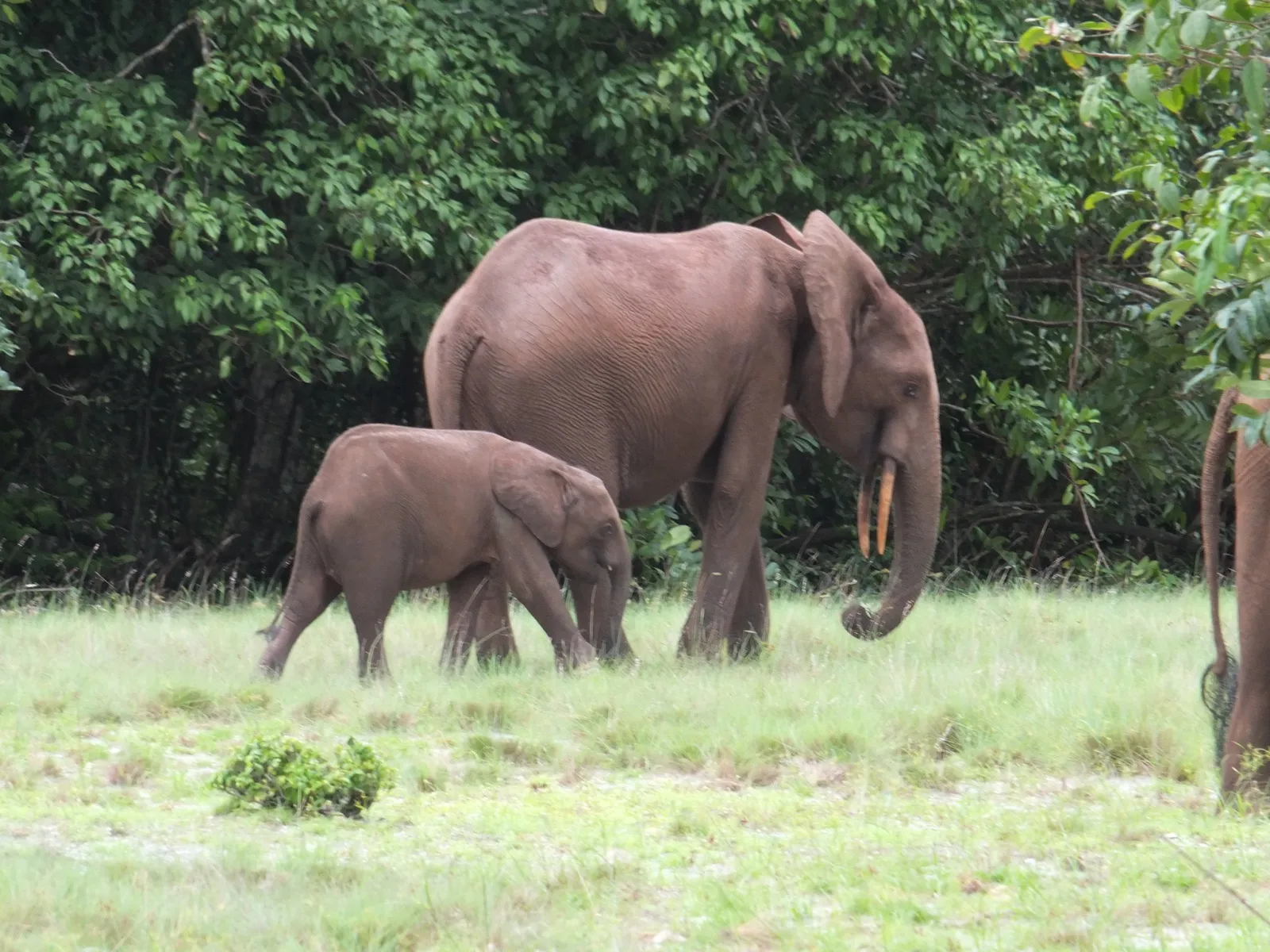
In a small territory it brings together four landscapes: the mangrove of the estuary, the forest, the savanna and long beaches open to the Atlantic. Forest elephants and buffalo move between forest and beach, where the elephants come to eat the iboga, and leatherback turtles come ashore to nest at night in season.
This safari sets out from Pointe Denis, in half days: by buggy, by day and then by night, and by boat for the whales. In the evening you dine and sleep at Pongara Lodge, inside the park.
The places, and what makes each unique
The Royal Estate The royal cemetery and the Bwiti temple of the Rapontchombo family, on the shore of the estuary. This is where you set out from.
Pointe Denis A spit of sand between ocean and estuary, directly across from Libreville. On the estuary side a long sandbank runs alongside it, with the Denis river flowing behind. It bears the name of King Denis. On one side the calm water of the estuary, on the other the Atlantic surf.
Pongara park A national park at the gates of the capital. Within a few kilometres, mangrove, forest, savanna and beach: forest elephants move from one to the other.
The open sea From July to September, humpback whales travel up from Antarctica to these warm waters to give birth. You approach them by boat and listen to their song.
The turtle beaches The beaches of Gabon are among the largest nesting grounds in the world for the leatherback, the biggest of all turtles. She comes ashore at night, in season.
The programme
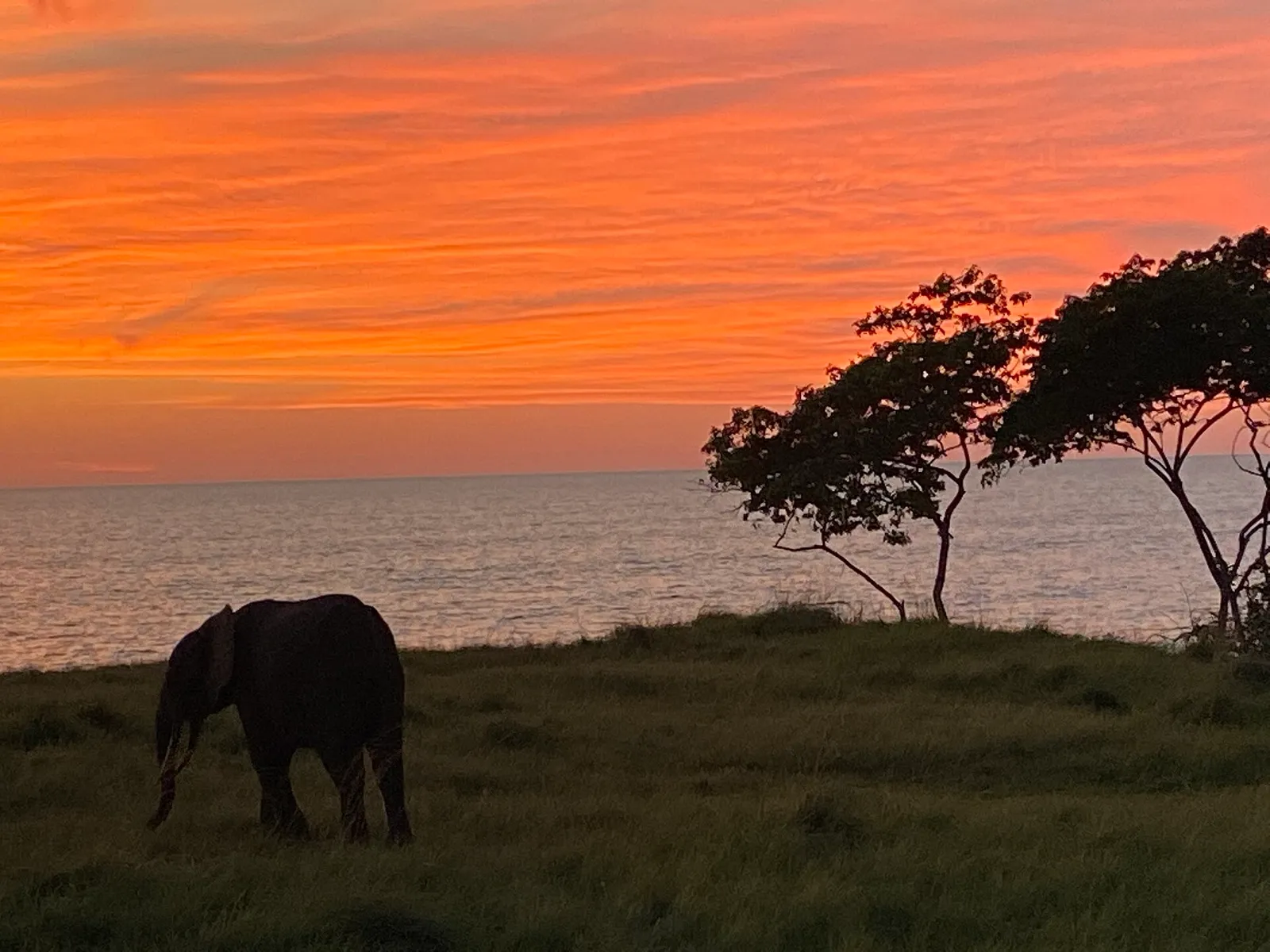
photo Christian Vigna, CC BY-SA 4.0 Day 1
The beach and the forest
Out by buggy along the beach, back through the forest, on the tracks of elephants and forest buffalo. A snack on the line of the equator.
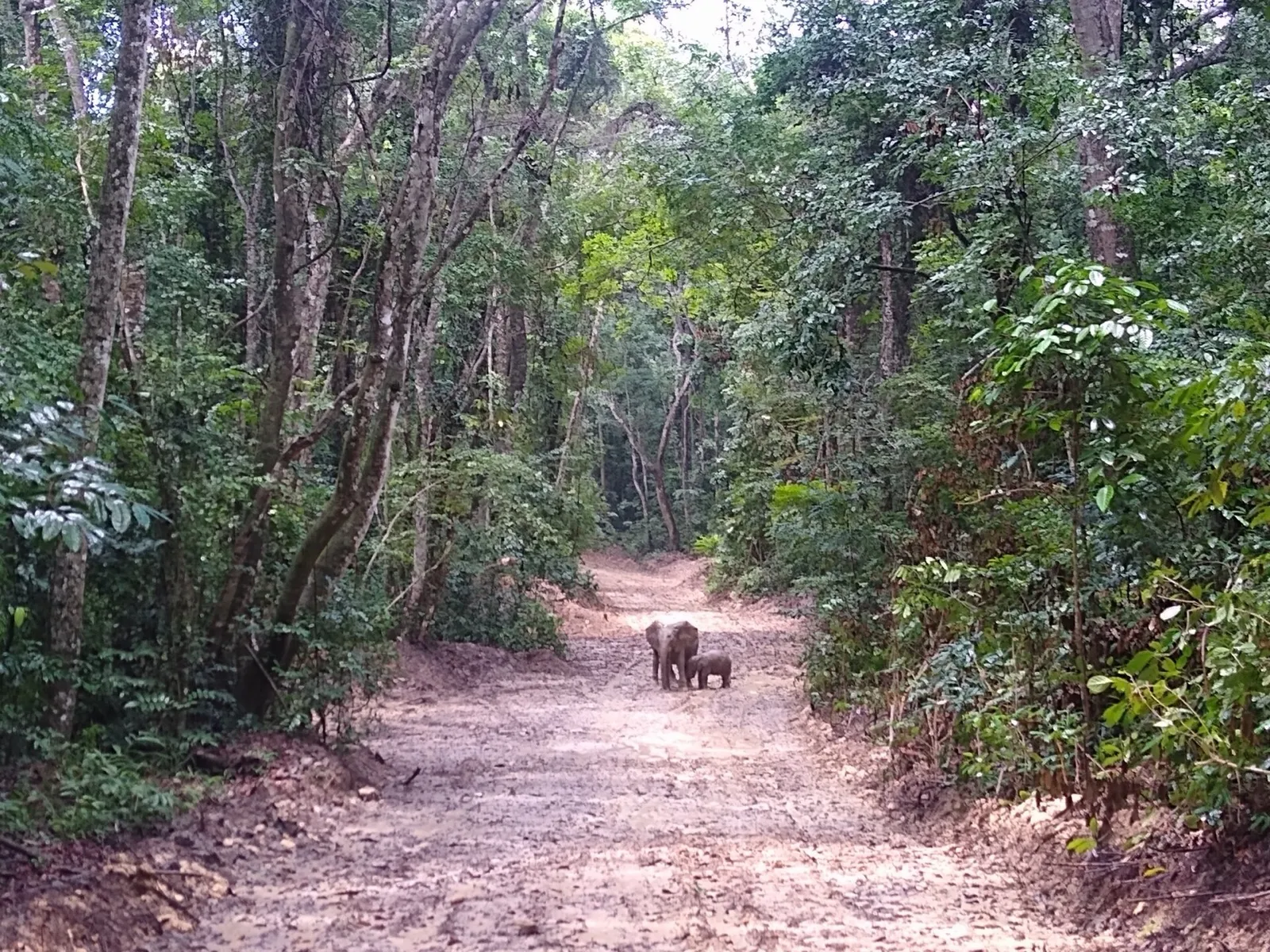
photo Nick Helme, CC BY-SA 4.0 Day 2
By day, then by night
Savanna and forest in the morning. In the evening, the same route by night, by lamplight: dwarf forest crocodiles, galagos and mongooses.
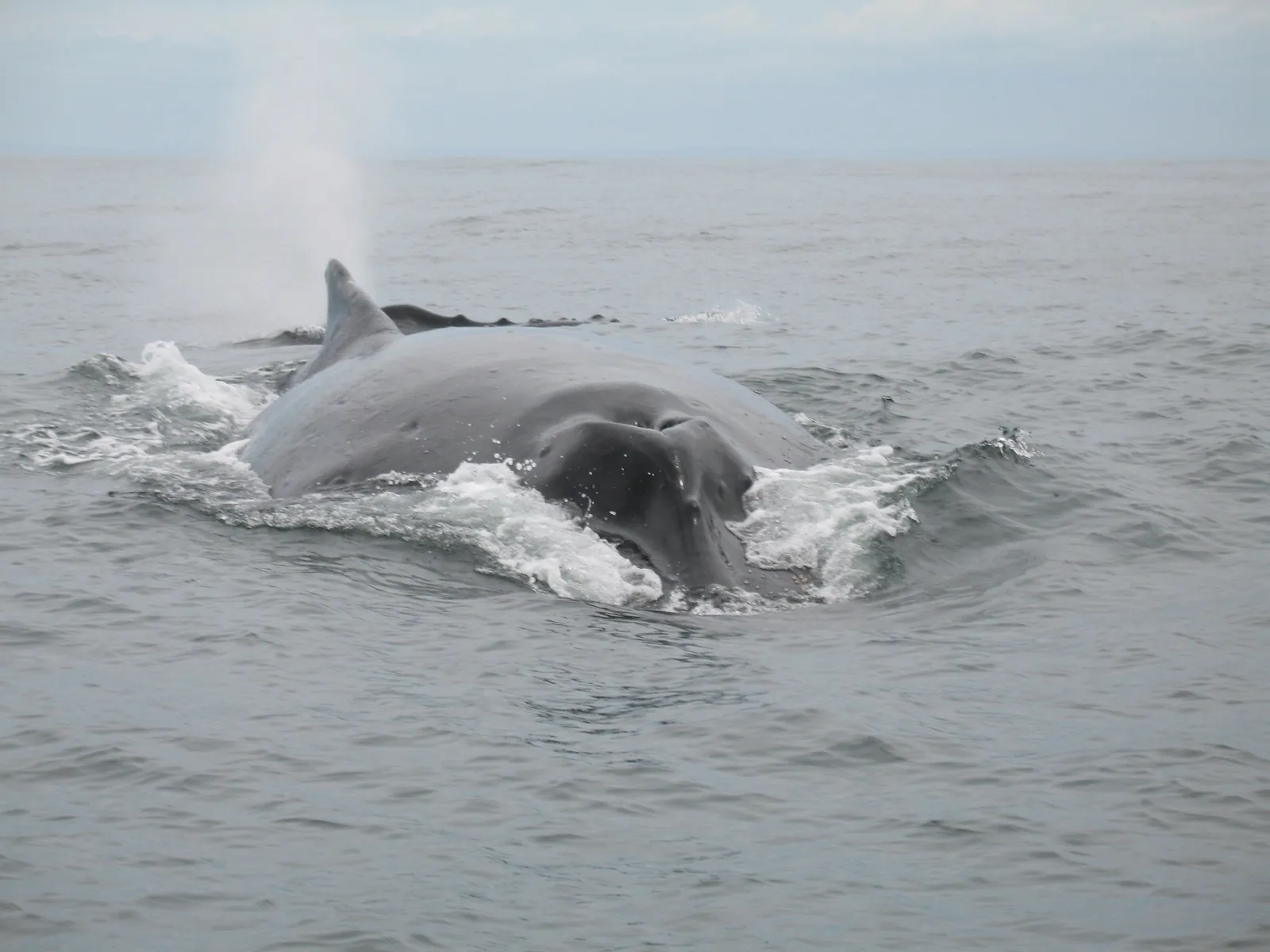
photo Lucy Keith-Diagne, CC BY 4.0 Day 3
The whales, by boat
About three hours at sea with a guide, to meet the humpback whales and listen to their song. From July to September; the rest of the year, an outing by buggy.
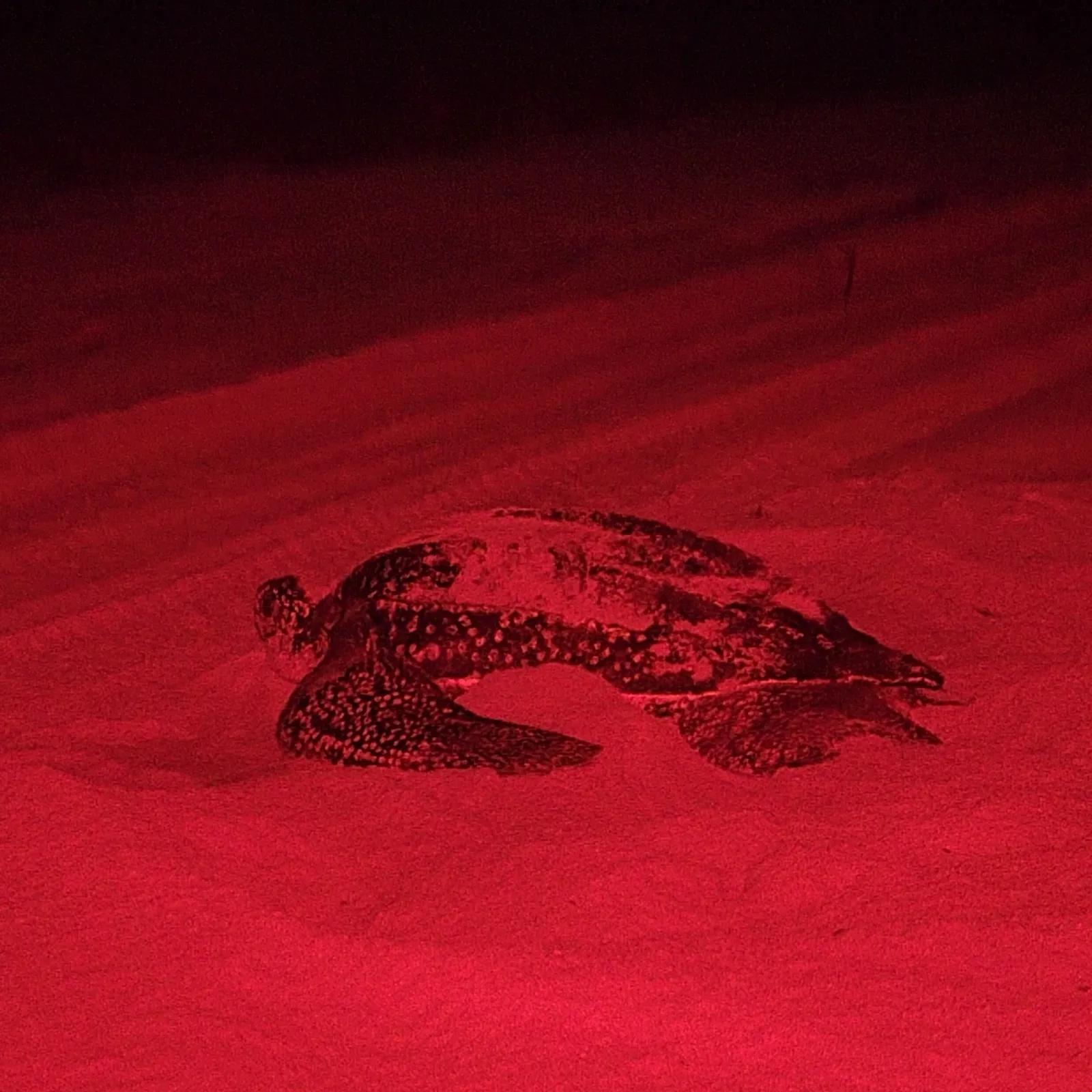
photo Nathan Van Cooten, CC BY 4.0 Day 3 · the evening
The outing of the season
In the evening, depending on the season: leatherback turtles nesting or hatchlings on the beach, or elephants coming down onto the sand in the mango season.
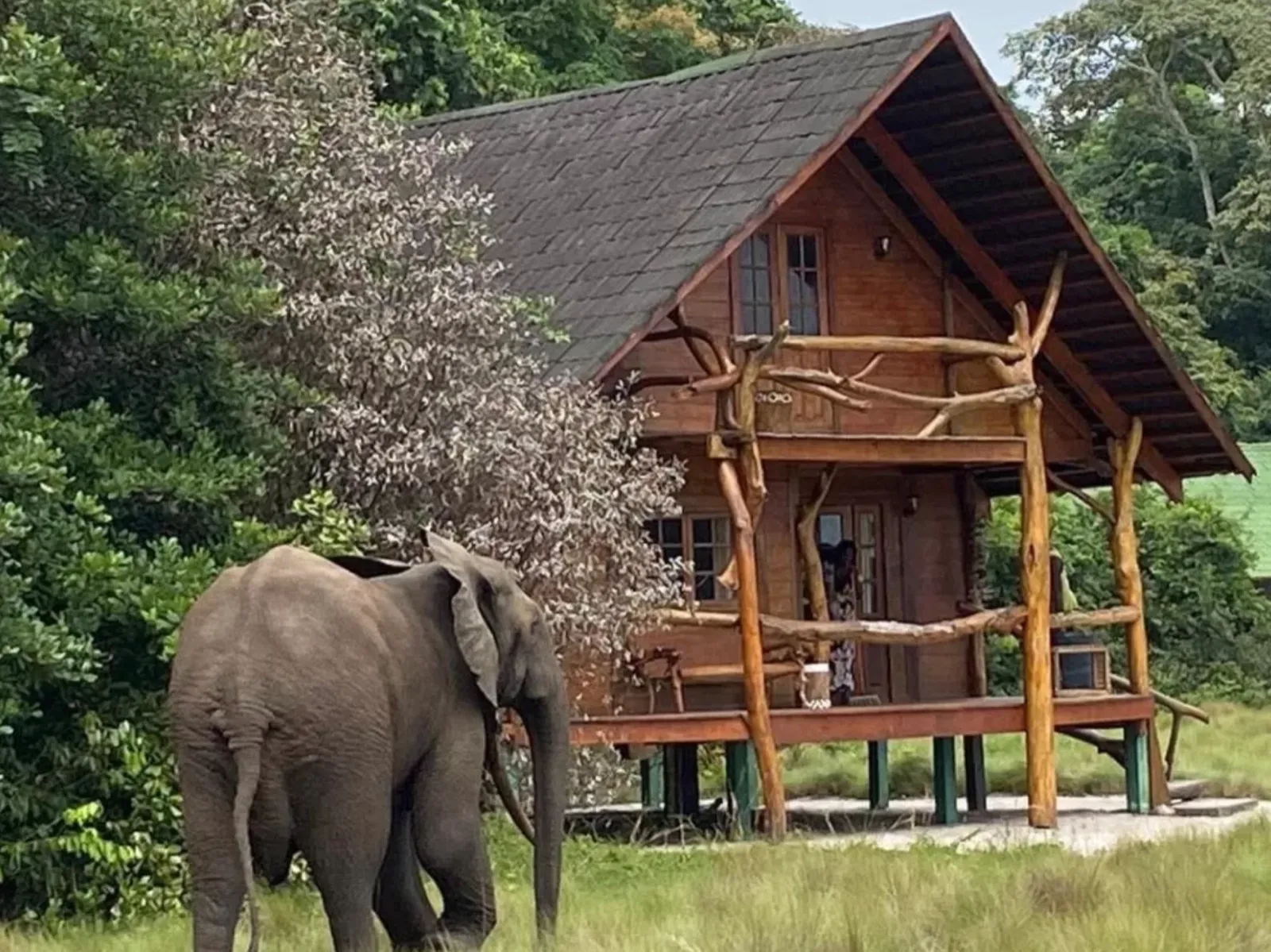
photo Pongara Lodge A forest elephant walks past a wooden bungalow on stilts, at Pongara Lodge.
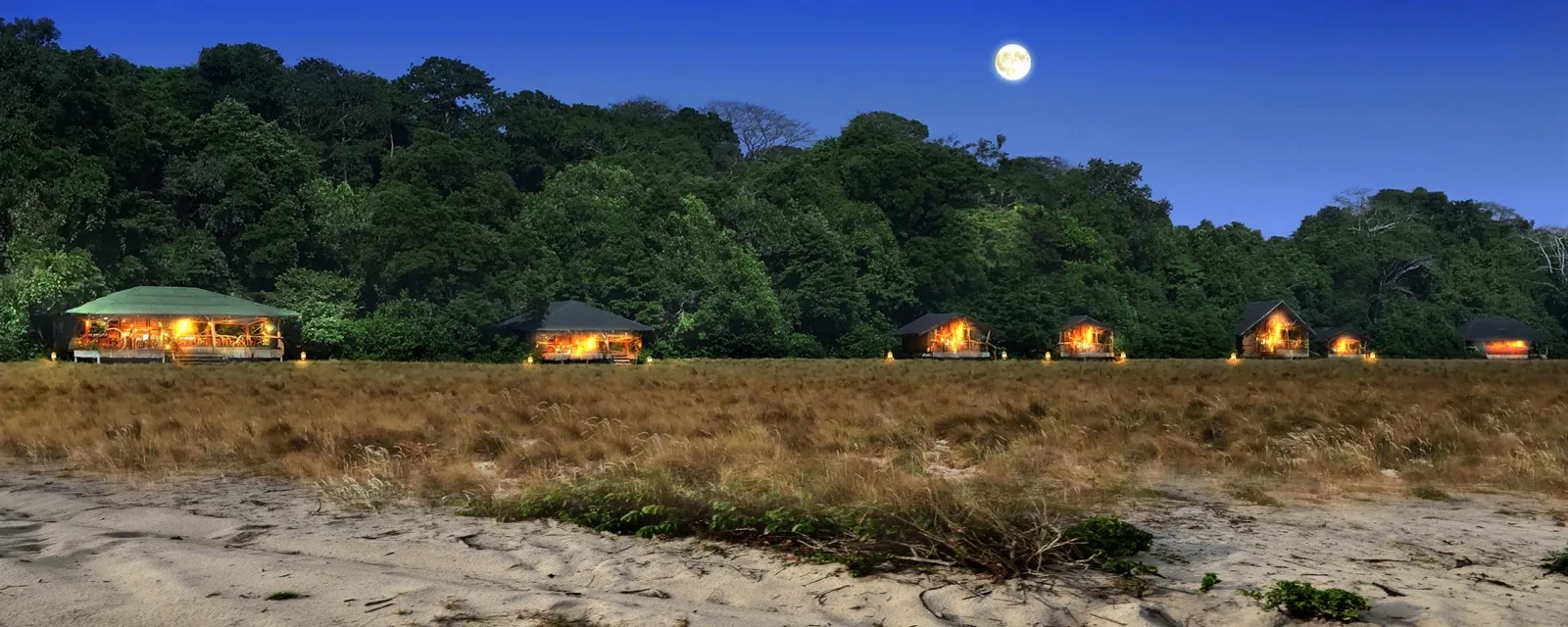
photo Pongara Lodge The bungalows of Pongara Lodge lit at nightfall, between forest and beach, under a full moon.
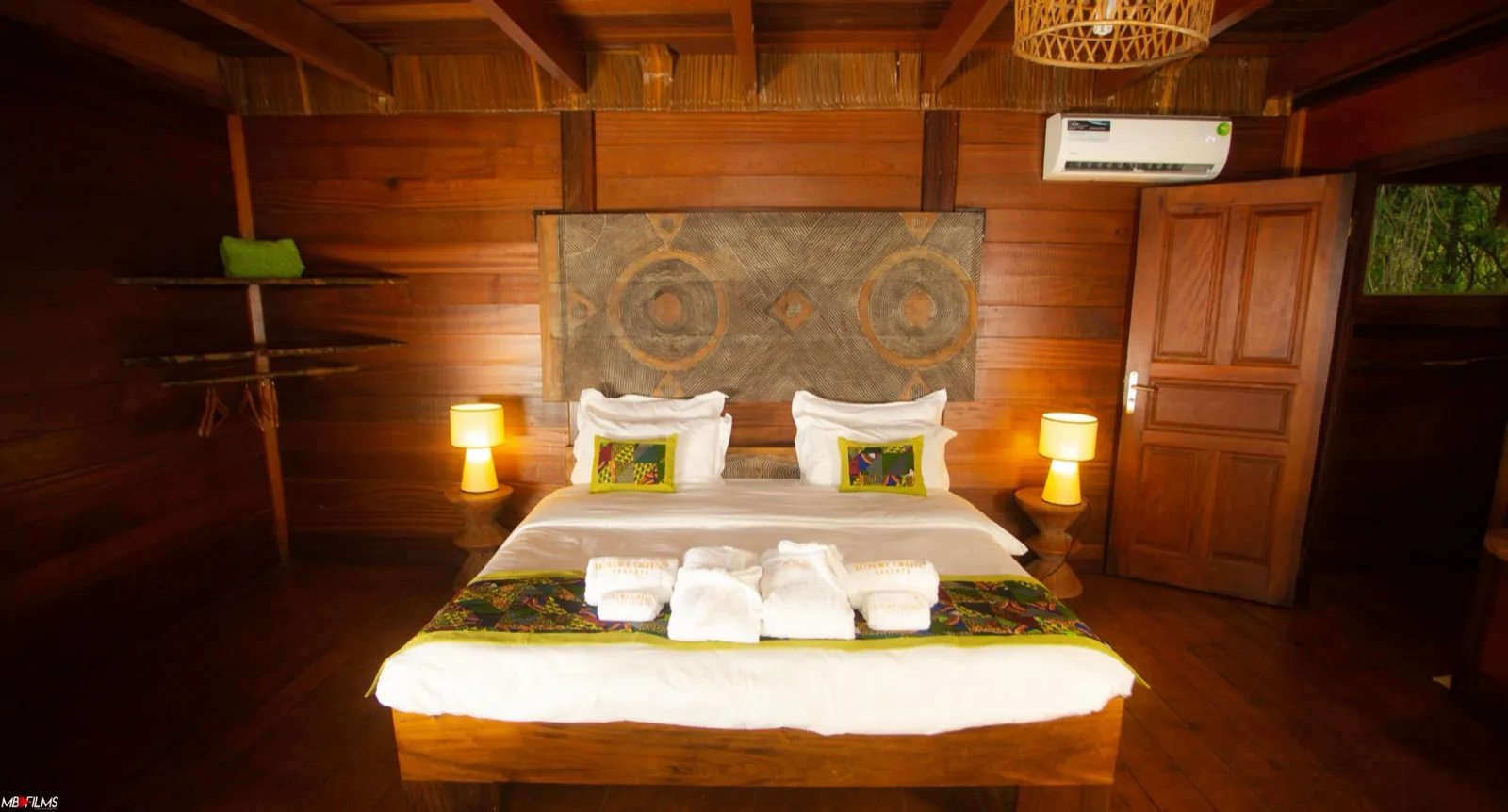
photo Pongara Lodge · MB Films A room at Pongara Lodge: wooden walls and floor, a large bed, a carved headboard.
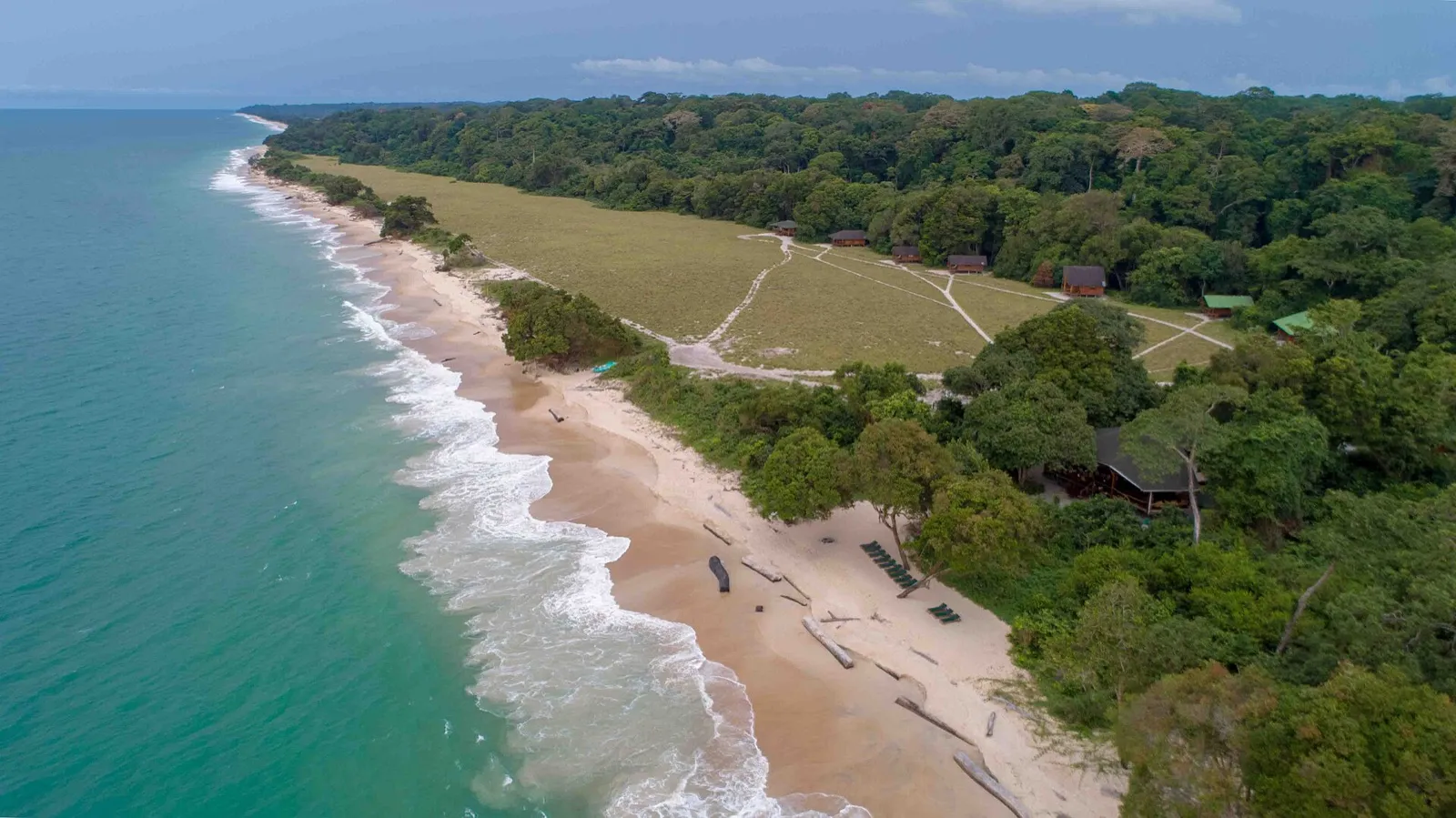
photo Allmania23, CC BY-SA 4.0 The bungalows of Pongara Lodge, between savanna and beach, seen from the air.
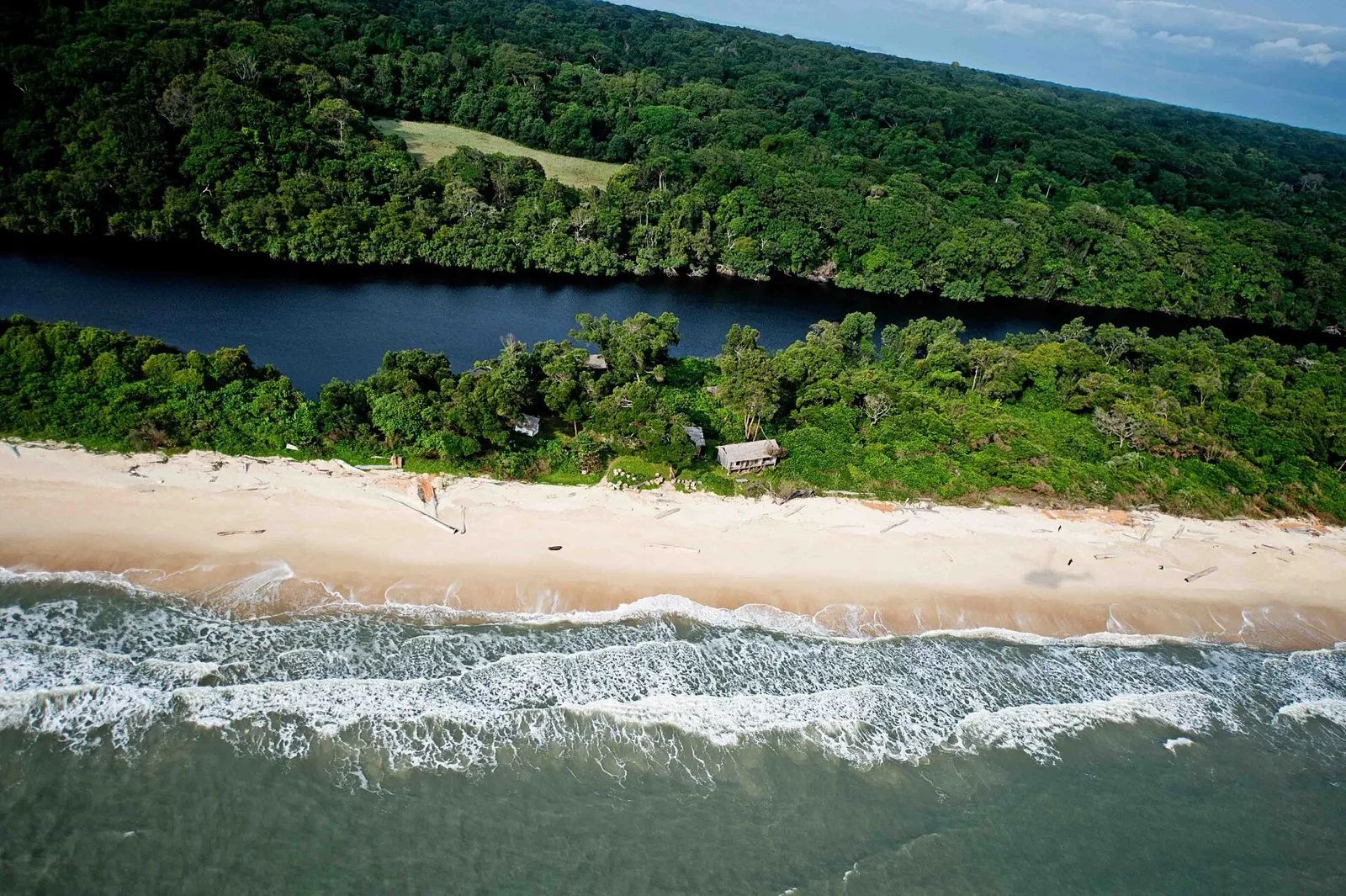
photo Allmania23, CC BY-SA 4.0 Cabins between the lagoon and the beach, in Pongara park, seen from the air.
Where you sleep
- Pongara LodgeInside the park, on the Atlantic beach
Wooden bungalows between the savanna and the ocean. You dine and sleep there in the evening, back from the safari: elephants sometimes walk past the lodge.
- La Baie des Tortues LuthAt Pointe Denis, facing the ocean
A lodge on the beach where leatherback turtles come to nest, a few minutes from the Royal Estate.
The choice of lodge depends on the season and on availability.
By season
The buggy safari runs all year. The other outings depend on the season.
Buggy safari, by day and by nightAll year
Humpback whales, by boatJuly to September
Elephants on the beach, in the mango seasonMid-October to early December
Leatherback turtles nesting, at nightNovember to March
Turtle hatchlings reaching the oceanJanuary to May
Pongara in pictures
photo Allmania23, CC BY-SA 4.0 The coast of Pongara from the air: ocean, beach, savanna and forest.
photo Allmania23, CC BY-SA 4.0 Pongara National Park from the air: the beach, a lagoon and the forest.
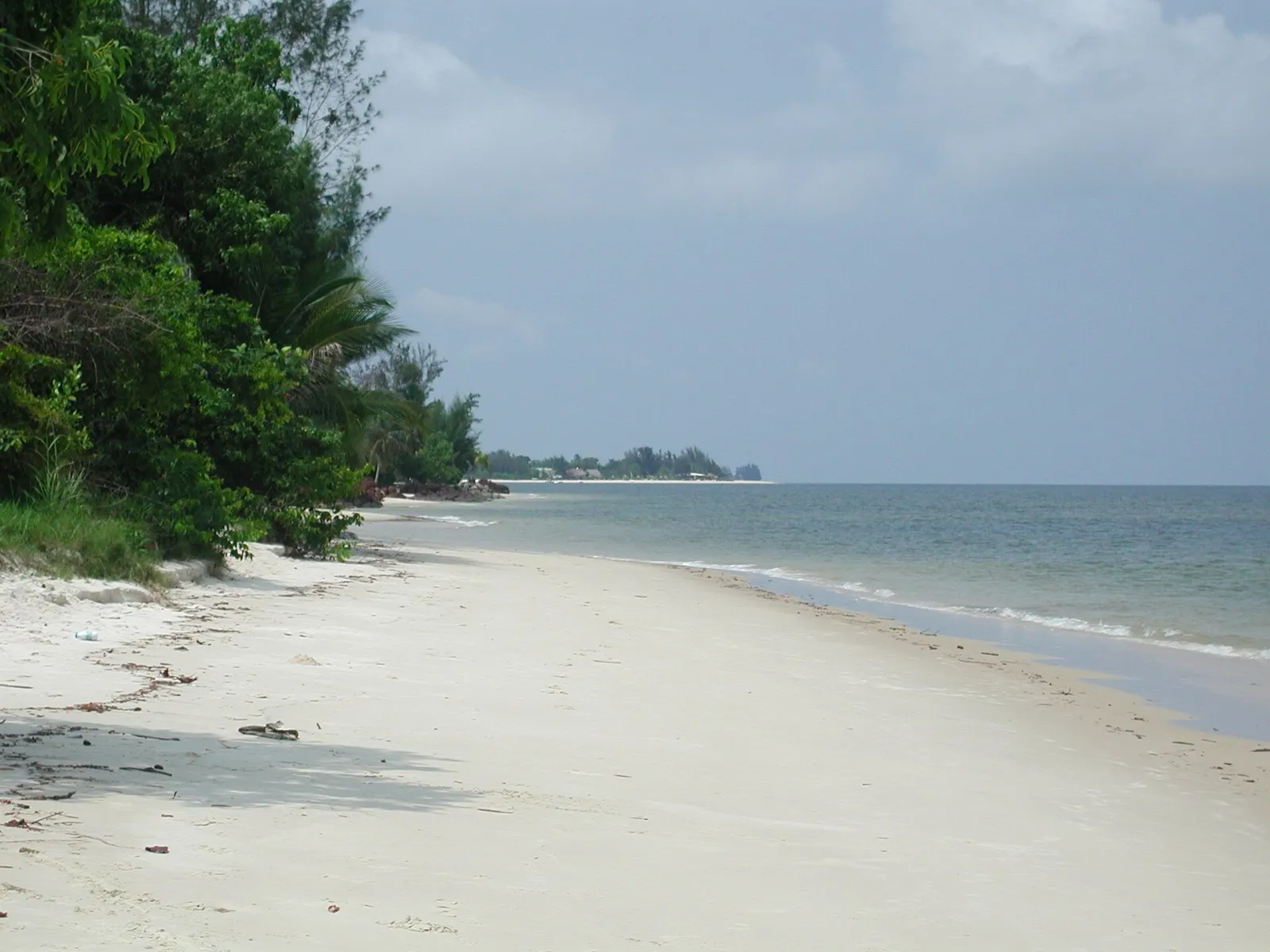
photo Nolween, CC BY-SA 3.0 A beach of white sand at Pointe Denis.
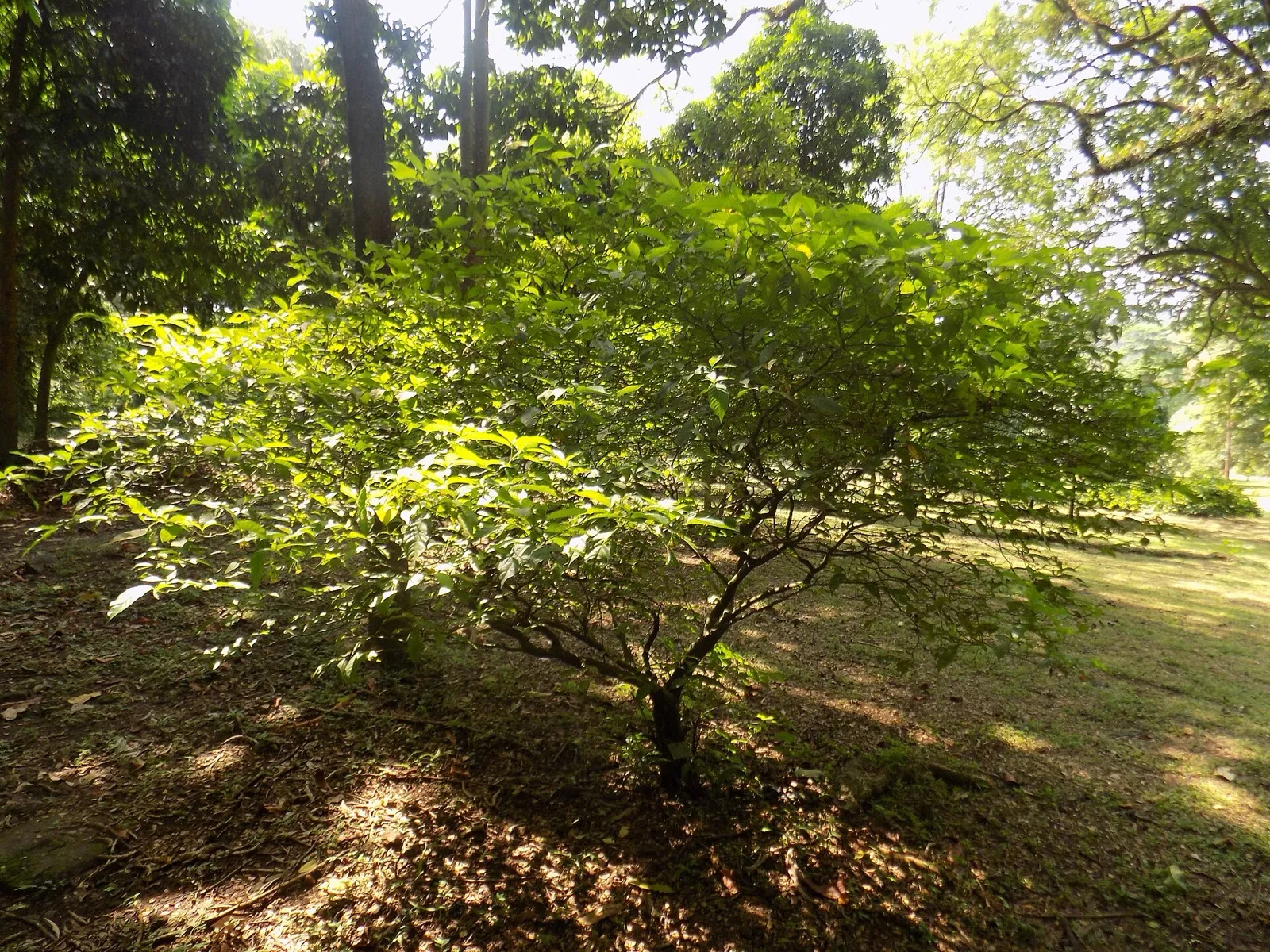
photo Hiobson, CC BY-SA 4.0 An iboga shrub, the sacred plant of the Bwiti, which grows in the undergrowth of the equatorial forest. Photograph taken at the Limbe botanical garden, Cameroon.
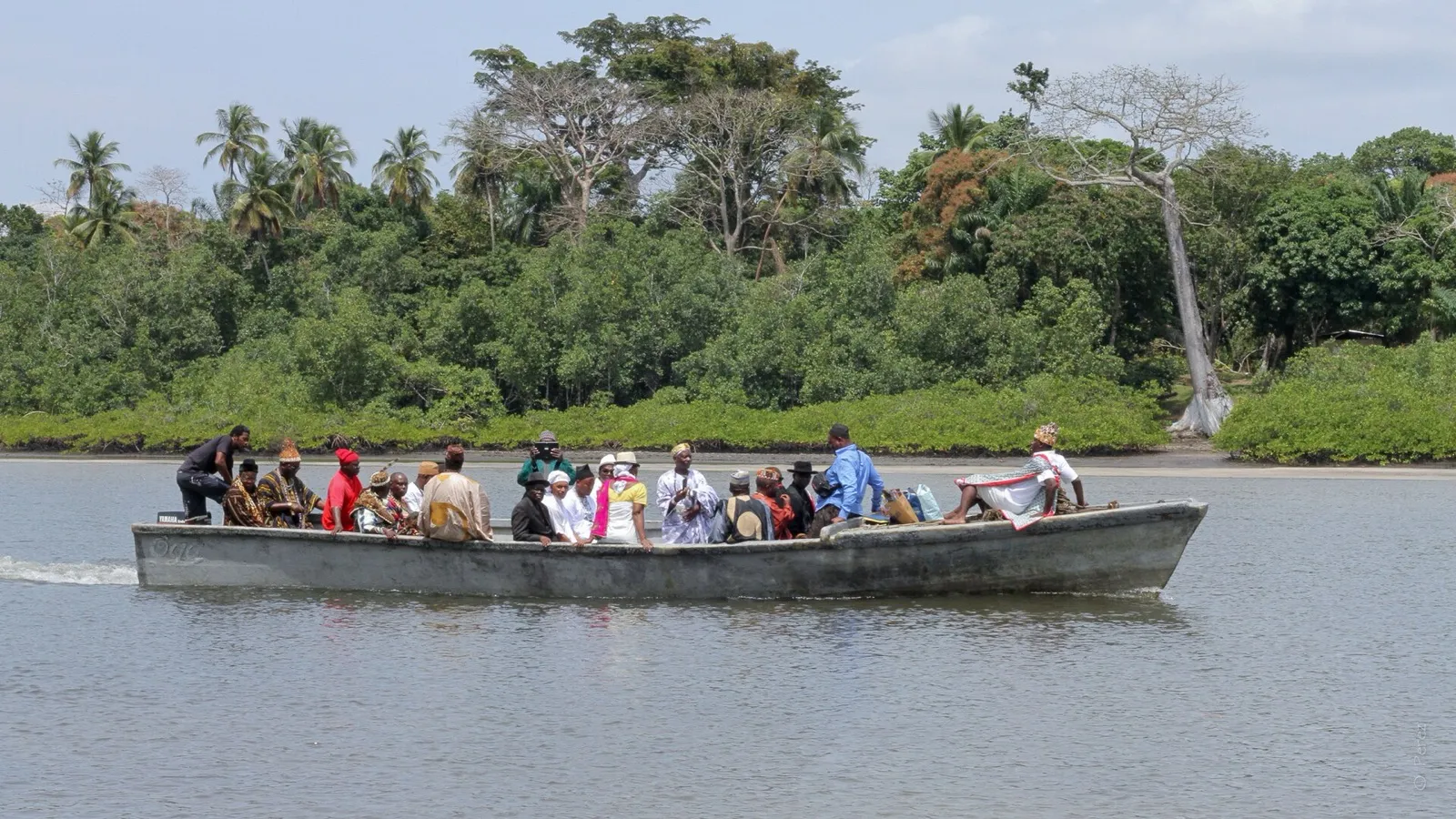
photo Mekem Z. Prosper, CC BY-SA 4.0 The crossing by pirogue, at Pointe Denis.
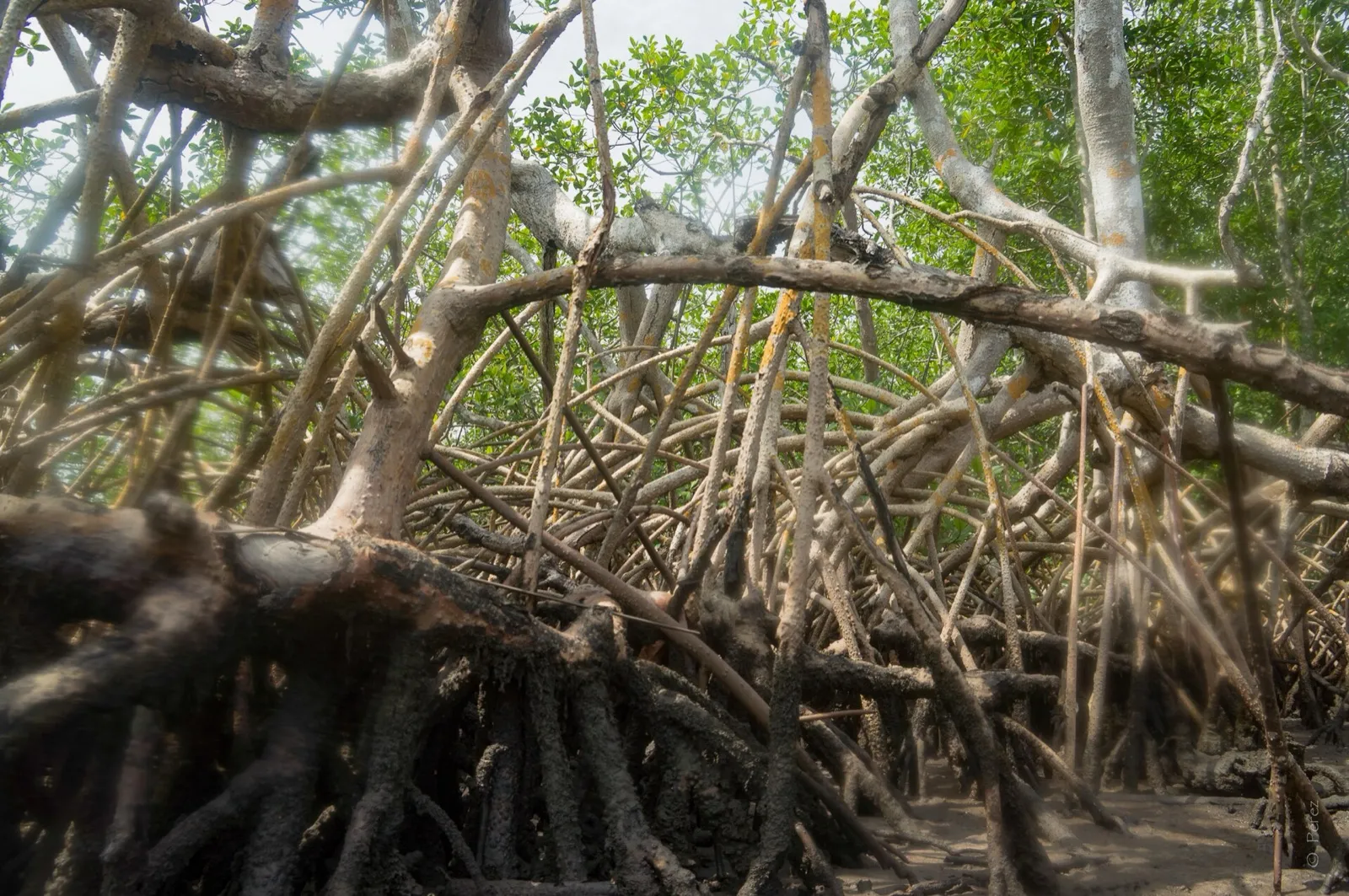
photo Mekem Z. Prosper, CC BY-SA 4.0 Mangrove roots, in the mangrove of Pointe Denis.
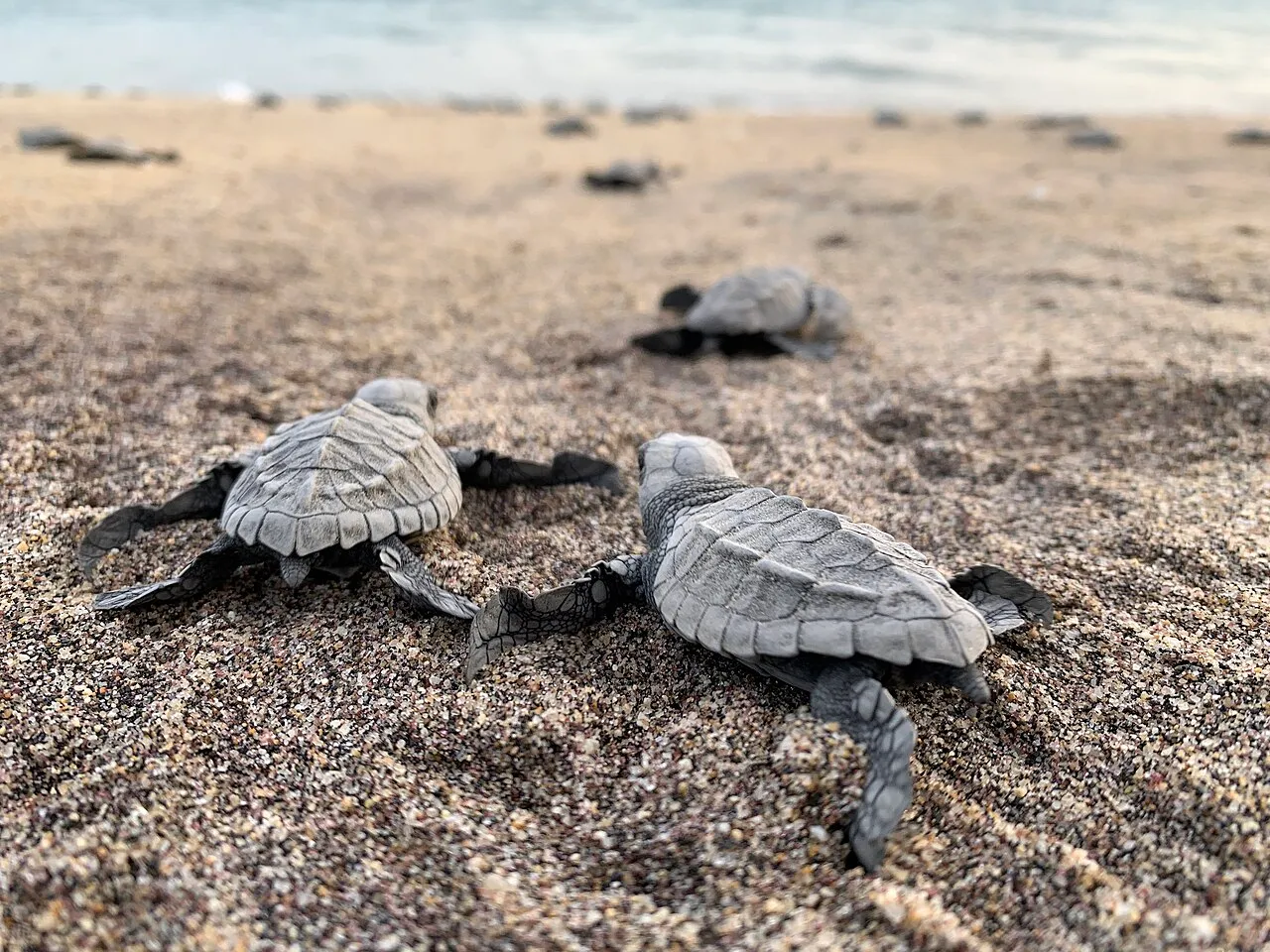
photo Bethany McCarter, CC BY 4.0, photo d’illustration Turtle hatchlings make for the ocean: from January to May, the newborns leave the sand of Pongara’s beaches. Illustrative photograph.
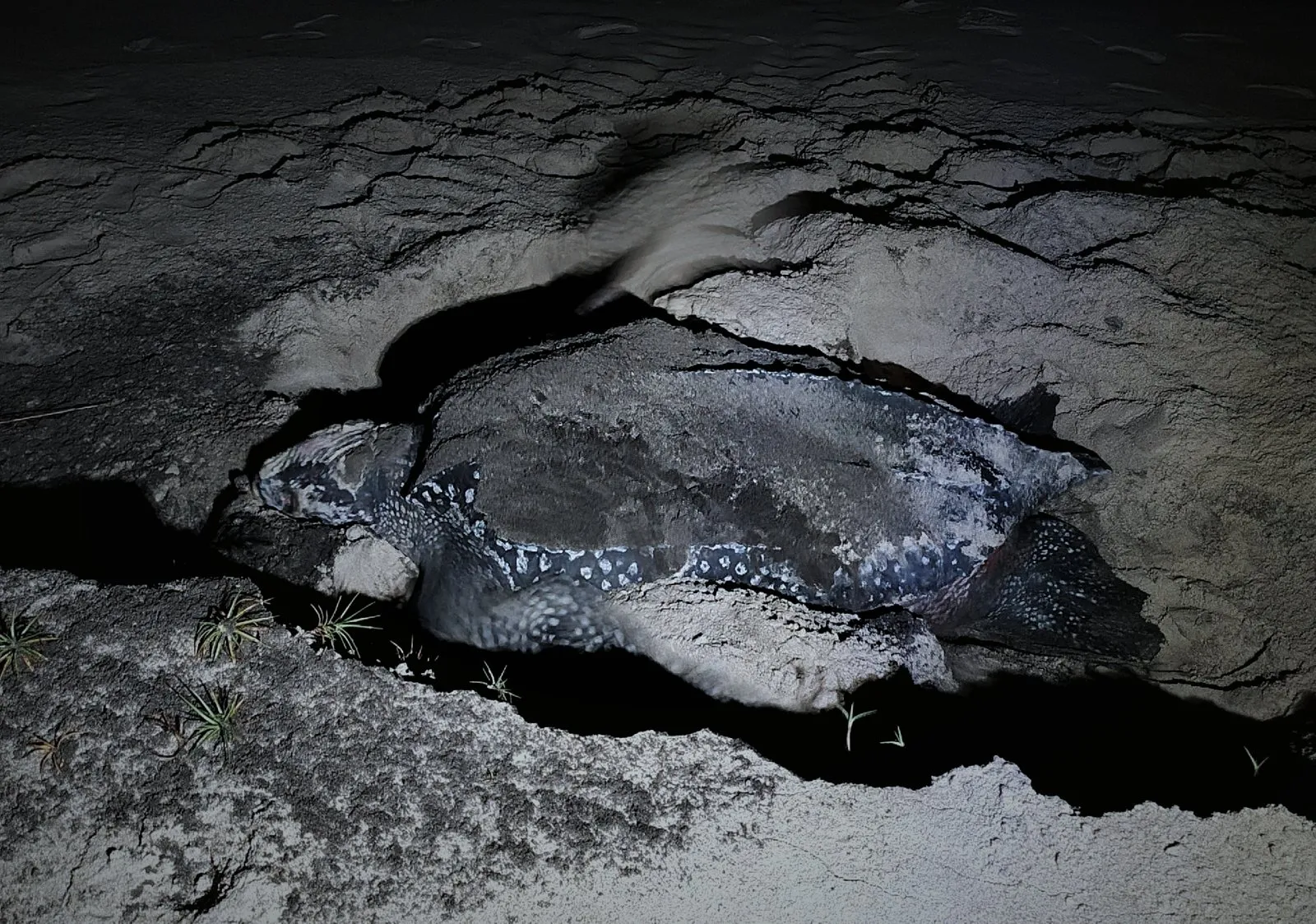
photo Nathan Van Cooten, CC BY 4.0 Leatherback turtle heading back to the ocean at night, near Pointe Denis.
Six days · further south, by way of Port-Gentil
Loango
Loango National Park stretches along the coast of Ogooué-Maritime, about three hundred kilometres south of Libreville. You reach it by a flight to Port-Gentil, then by road and pirogue.
It is the most famous park in Gabon. Forest, savanna and lagoons run down to the ocean: elephants, buffalo and hippos show themselves on the beach. The park is also home to western lowland gorillas accustomed to people, approached on foot with a guide.
This journey is a six-day loop, with nights in Omboué, at Loango Lodge in Iguéla and in Port-Gentil.
The stages, and what makes each unique
The Royal Estate The starting point: Pointe Denis.
Libreville The capital, on the northern shore of the estuary. You take the first flight of the morning.
Port-Gentil The country’s economic capital, built on a peninsula at the mouth of the Ogooué, at Cape Lopez. For a long time it could be reached only by air or by sea; a new road now links it to the south.
Omboué A small town on the Fernan-Vaz lagoon, one of the largest in Gabon. It is the gateway to Loango: here the road ends and the pirogue takes over.
The island of the gorillas On the lagoon, an island where rescued gorillas live under the watch of their keepers. You observe them from the pirogue, in the branches and at the water’s edge.
Iguéla The northern gate of the park, on its lagoon. The lodge stands at the water’s edge; you see hippos there and, at night, dwarf forest crocodiles.
Loango park The park where forest, savanna and lagoon meet the ocean. Elephants, buffalo and hippos come onto the beach, and you approach western lowland gorillas on foot, which very few countries allow.
The programme
Further down the coast, Loango National Park: the island of the gorillas, two full days in the park and an evening in Port-Gentil.
- 1Libreville, Port-Gentil, OmbouéMorning flight, then the new road and one of the longest bridges in Africa to Omboué. A visit to the village.
- 2The island of the gorillasBy pirogue to the island where gorillas live under the watch of their keepers: you see them in the branches and at the water’s edge.
- 3Iguéla, northern LoangoBy road to Iguéla, settling into the lodge, a first safari in the late afternoon.
- 4The gorillas on footTracking western lowland gorillas with a guide, one hour in their company. A night outing: hippos and dwarf forest crocodiles.
- 5The sand spitBetween lagoon and ocean, elephants, hippos and crocodiles. Or birds by pirogue, or fishing.
- 6The forest and the way backA forest walk in the morning, lunch, then Port-Gentil for the night or straight back to Libreville.
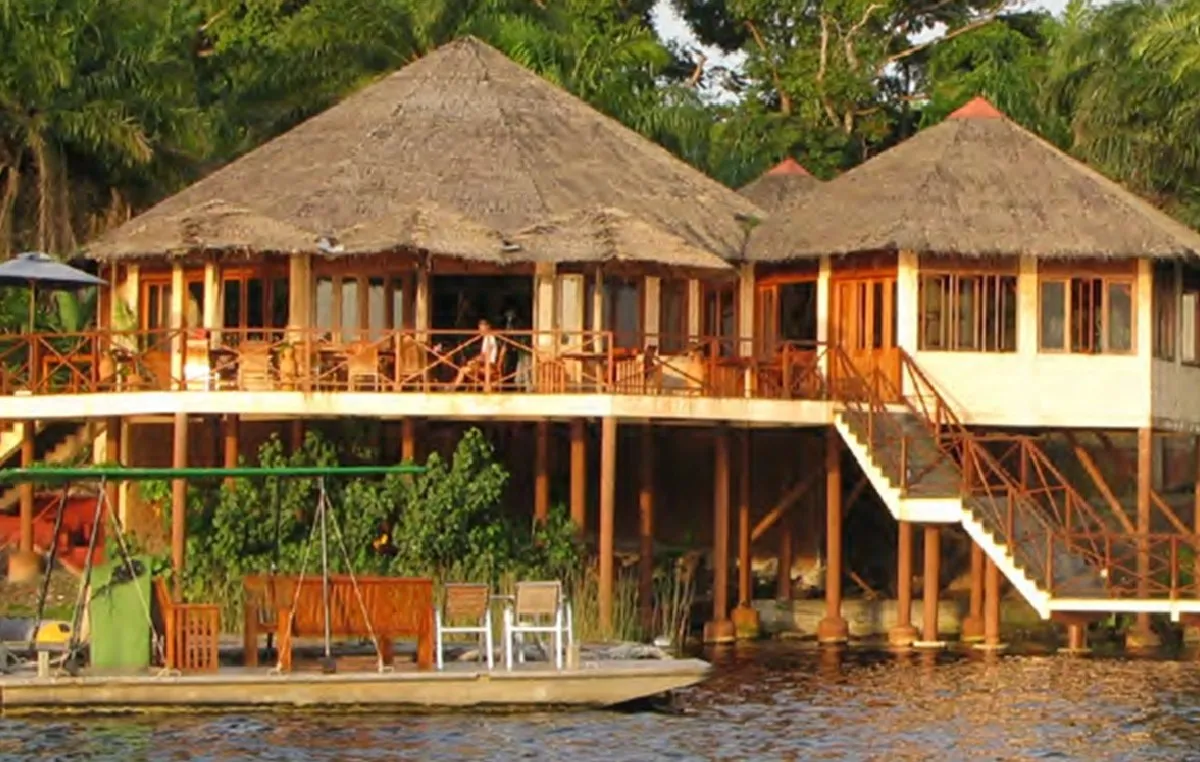
photo Loango Lodge Loango Lodge, on stilts at the edge of the lagoon: thatched roofs, terrace and jetty.
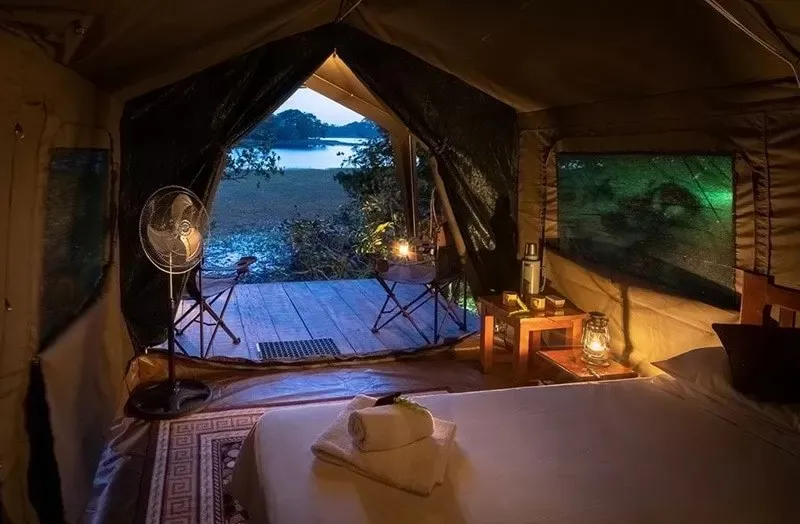
photo Loango Lodge From a safari tent, the wooden deck and the lagoon at dusk.
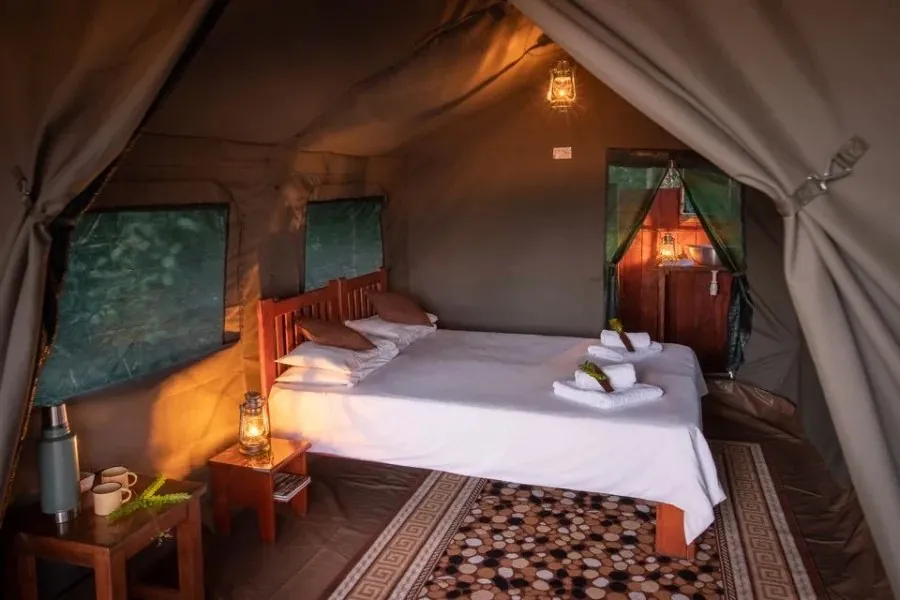
photo Loango Lodge Inside a safari tent: a large bed, lanterns and a washroom.
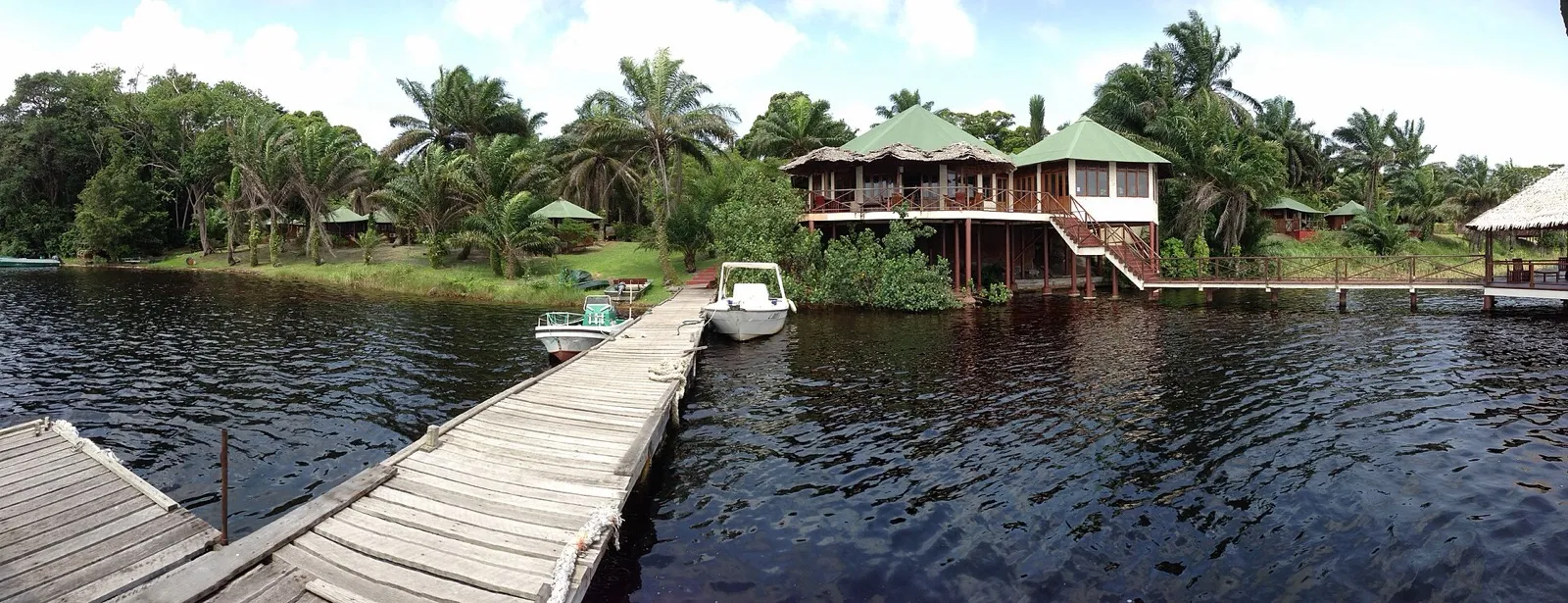
photo Kurt Dundy, CC BY 3.0 Lodge on stilts at the edge of the lagoon, with its jetty, in Loango park.
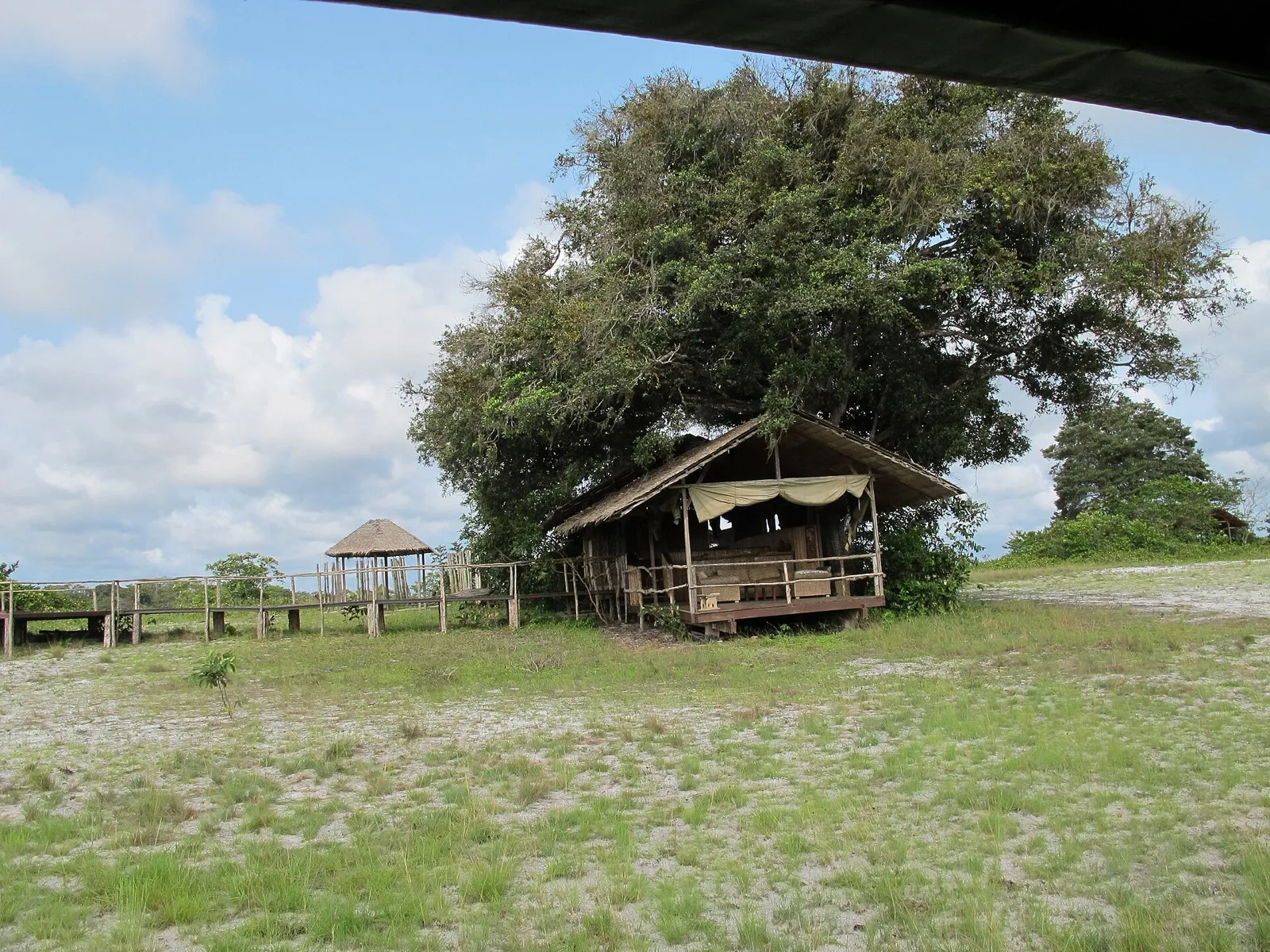
photo Kurt Dundy, CC BY 3.0 The terrace of a camp in Loango park, open onto the landscape.
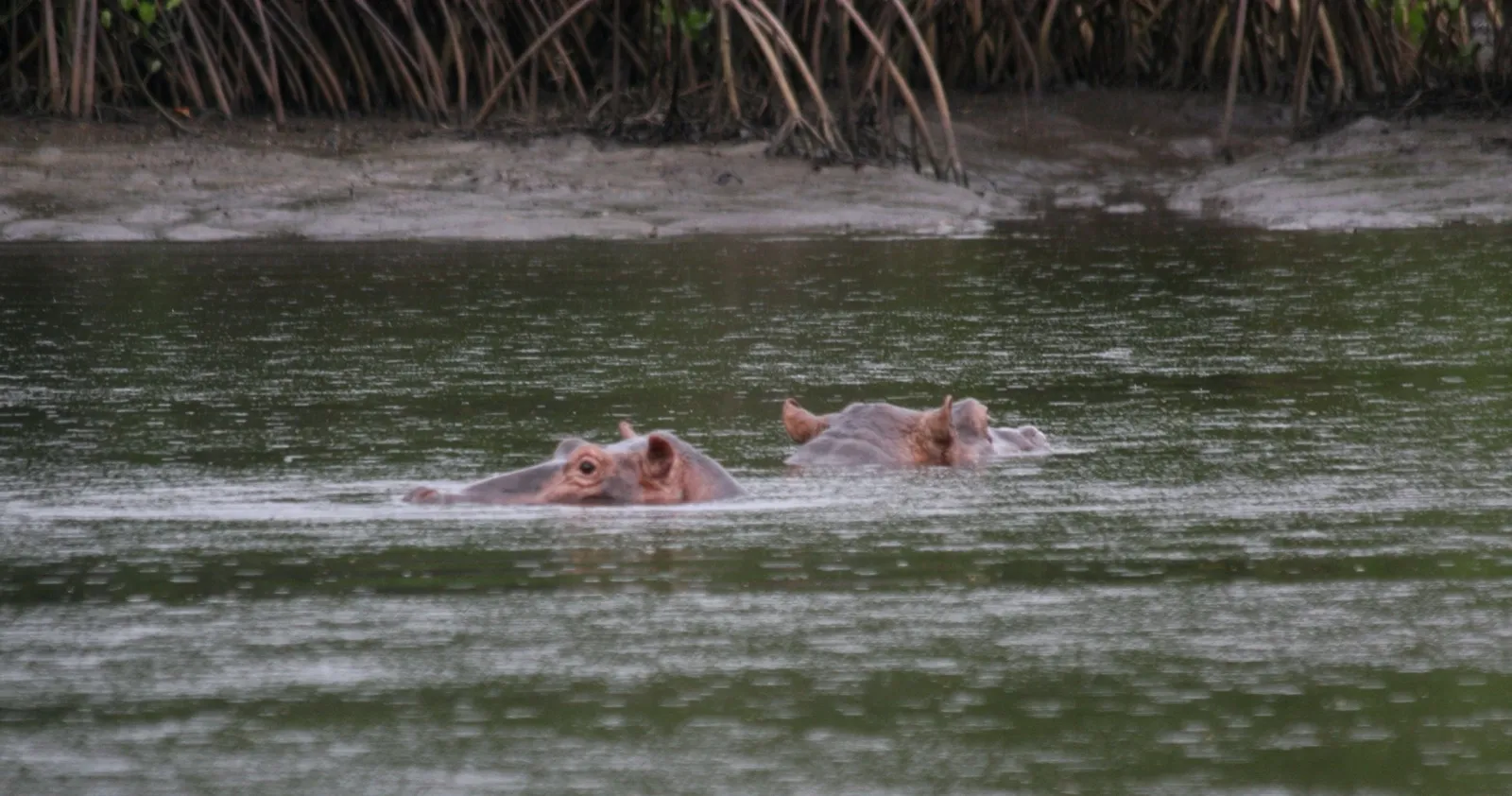
photo Lucy Keith-Diagne, CC BY 4.0 Two hippos in the lagoon, beneath the mangrove trees.
Where you sleep
- Loango LodgeAt Iguéla, on the lagoon
The park’s main lodge, on stilts at the water’s edge. Safaris, pirogue outings and gorilla tracking all set out from here.
- AkakaForest camp, in the south of the park
A tented camp beside a river, reached by boat: the realm of forest elephants and birds.
- Louri et TassiBeach and savanna camps
Two small camps close to the ocean, to watch the animals come onto the beach at sunrise and sunset.
The choice of lodge depends on the season and on availability.
By season
The gorillas and the lagoon can be visited all year. What you see on the beach and offshore depends on the month.
Gorillas on foot, safari and pirogue on the lagoonAll year
Elephants, buffalo and hippos on the beachDecember to April or May
Humpback whales, offshoreJuly to September
Leatherback turtles nesting, at nightNovember to March
Loango in pictures
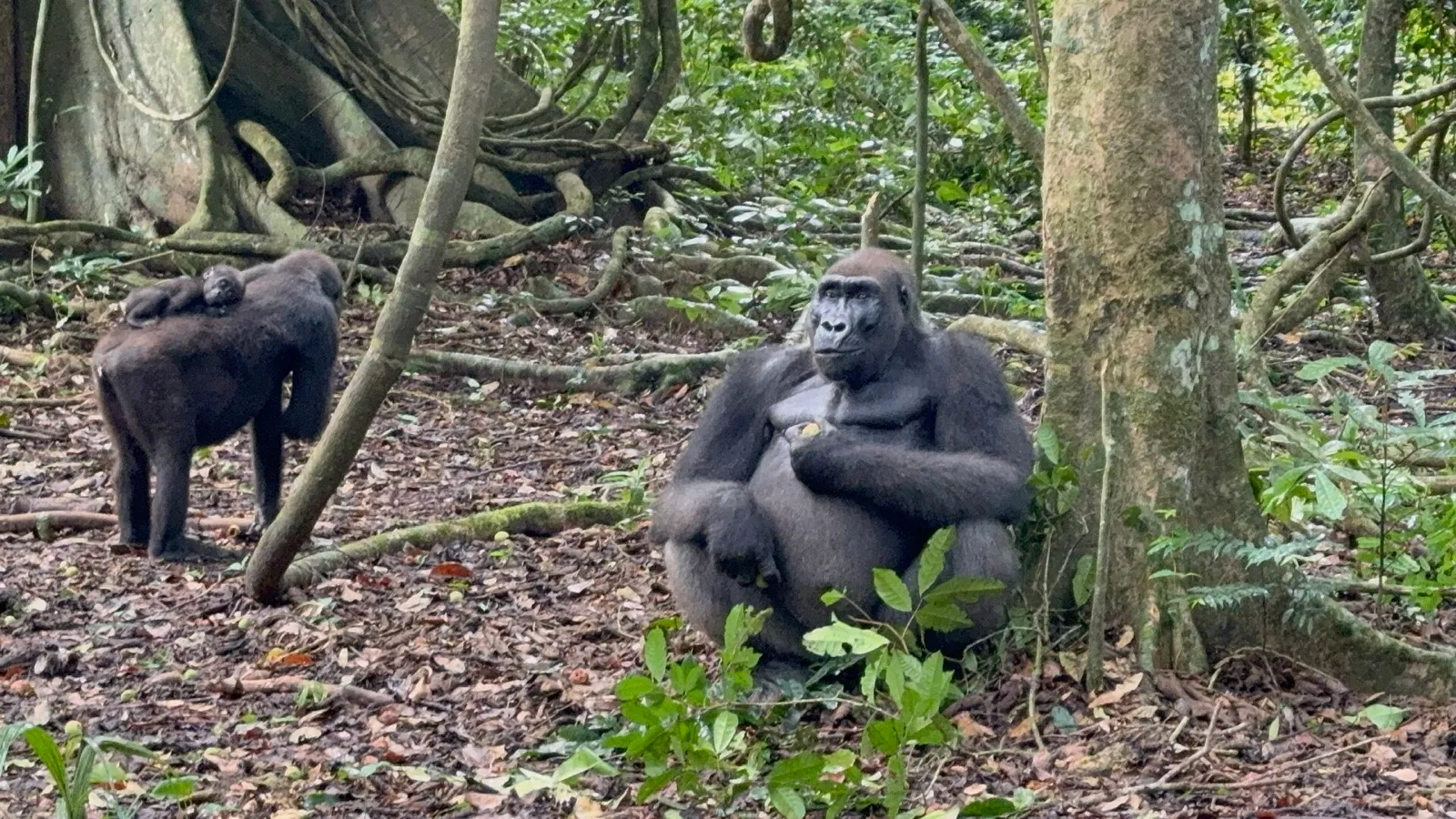
photo TheLeftCoast, CC0 Silverback gorilla seated in the forest, a female and her infant behind him, in Loango.
photo Kurt Dundy, CC BY 3.0 Lodge on stilts at the water’s edge, with its jetty, in Loango park.
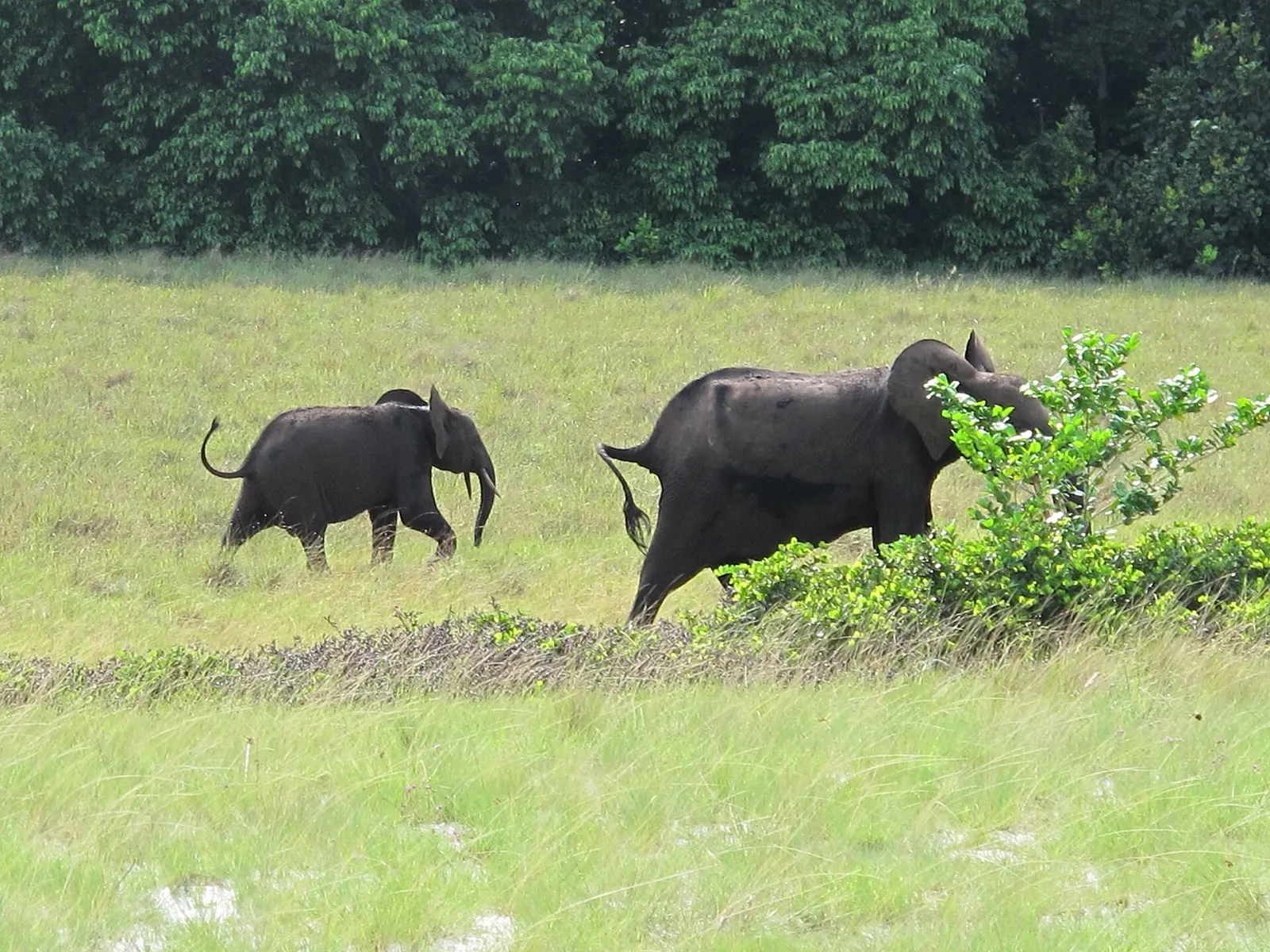
photo Kurt Dundy, CC BY 3.0 Forest elephant cow and her calf in the savanna of Loango park.
photo Lucy Keith-Diagne, CC BY 4.0 Two hippos in the lagoon, beneath the mangrove trees.
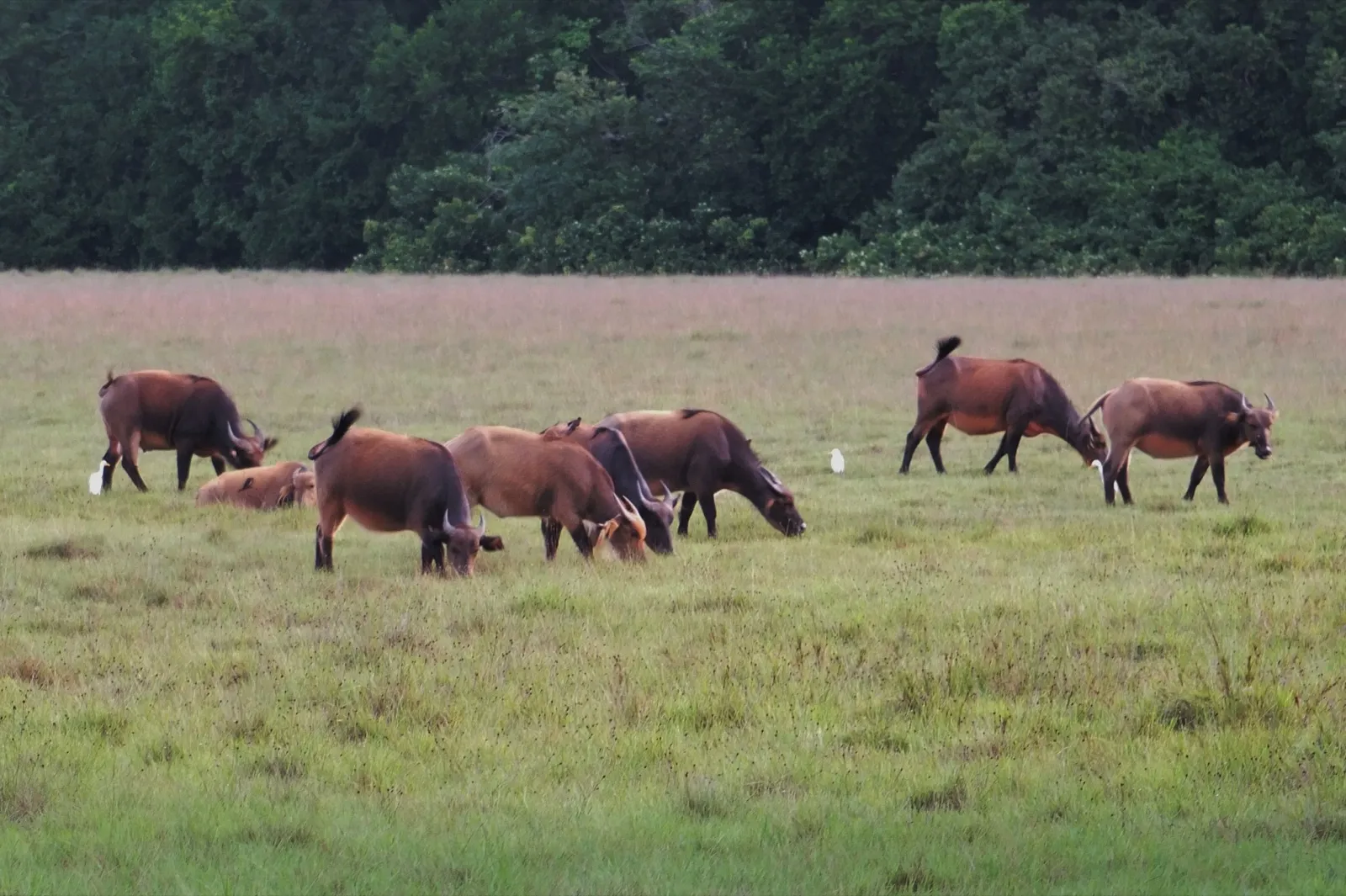
photo Tony King, CC BY 4.0 A herd of forest buffalo in the savanna, egrets beside them.
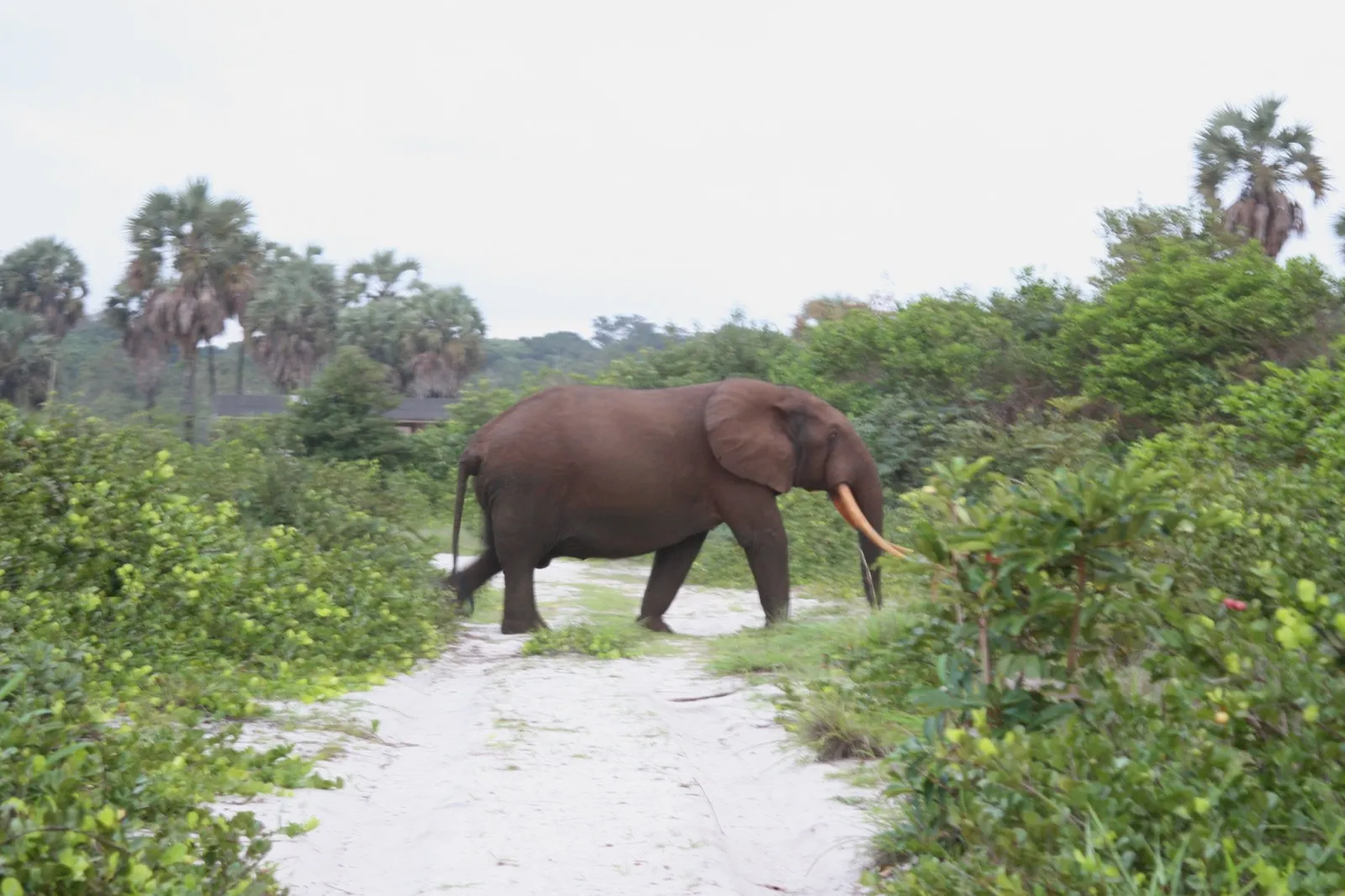
photo Lucy Keith-Diagne, CC BY 4.0 A forest elephant makes for the beach. In Loango, the guides say, elephants come there to eat the fruit of the iboga.
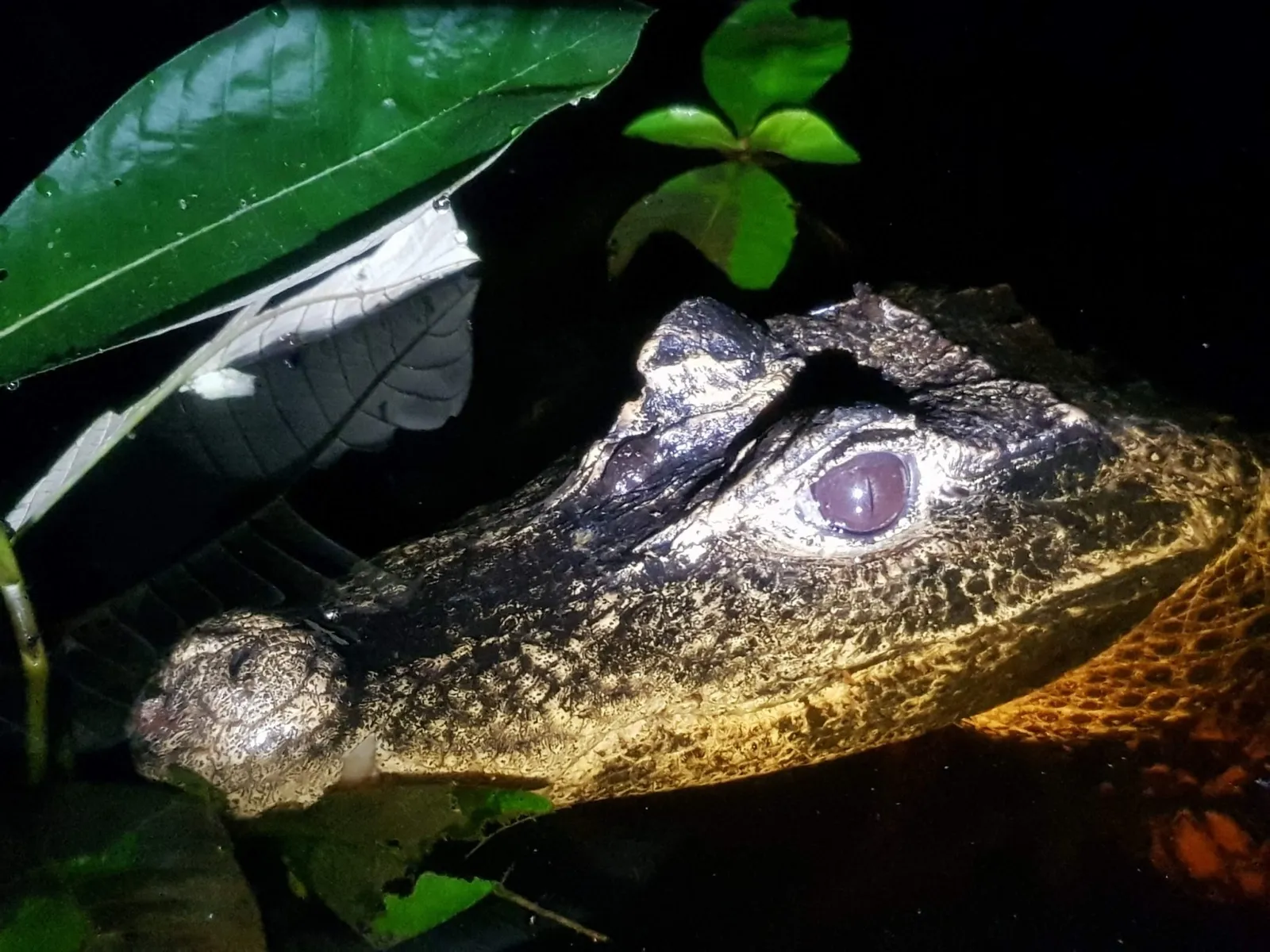
photo iNaturalist, CC0 Dwarf forest crocodile at night, by lamplight.
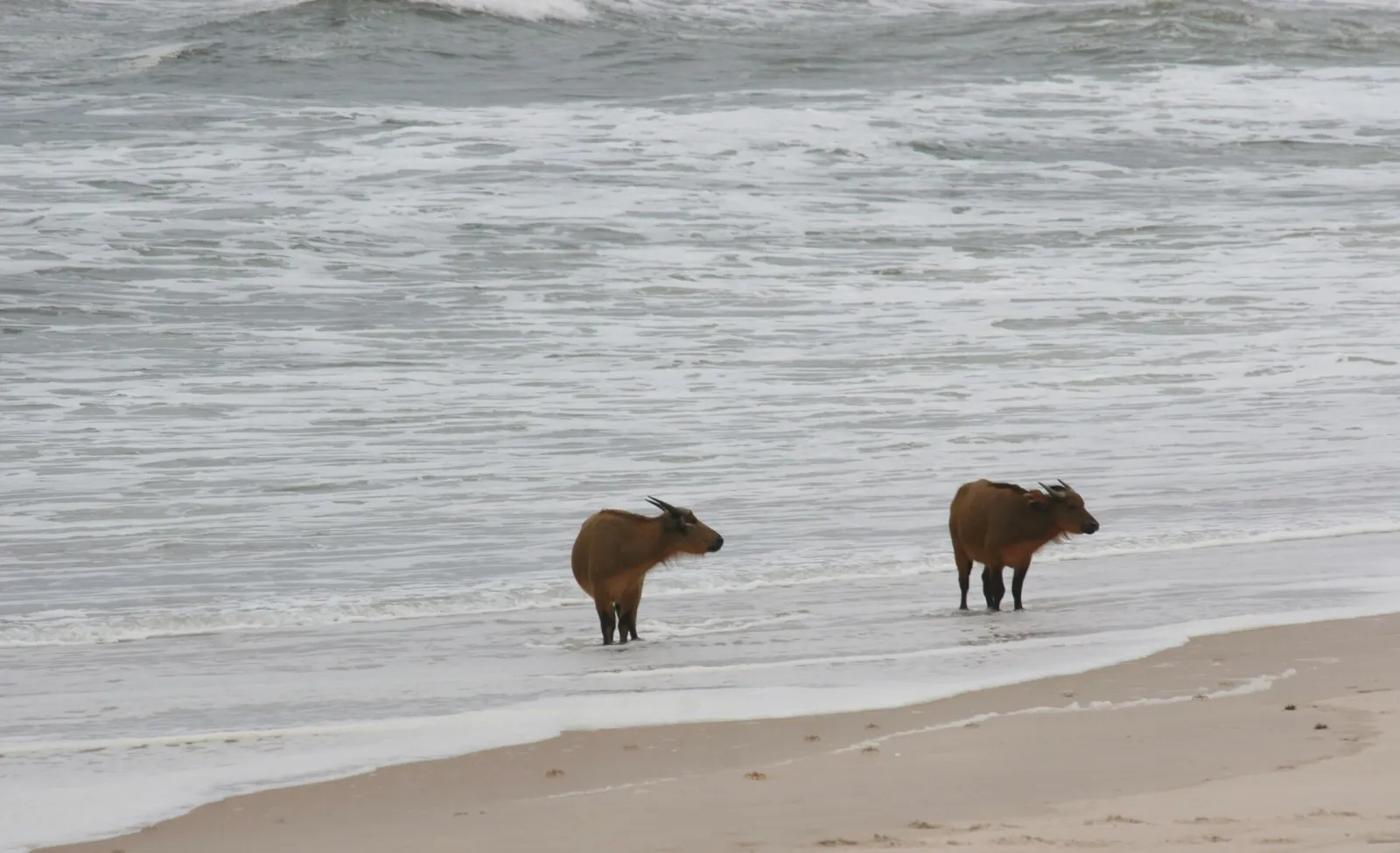
photo Lucy Keith-Diagne, CC BY 4.0 Two forest buffaloes on the beach at the water’s edge.
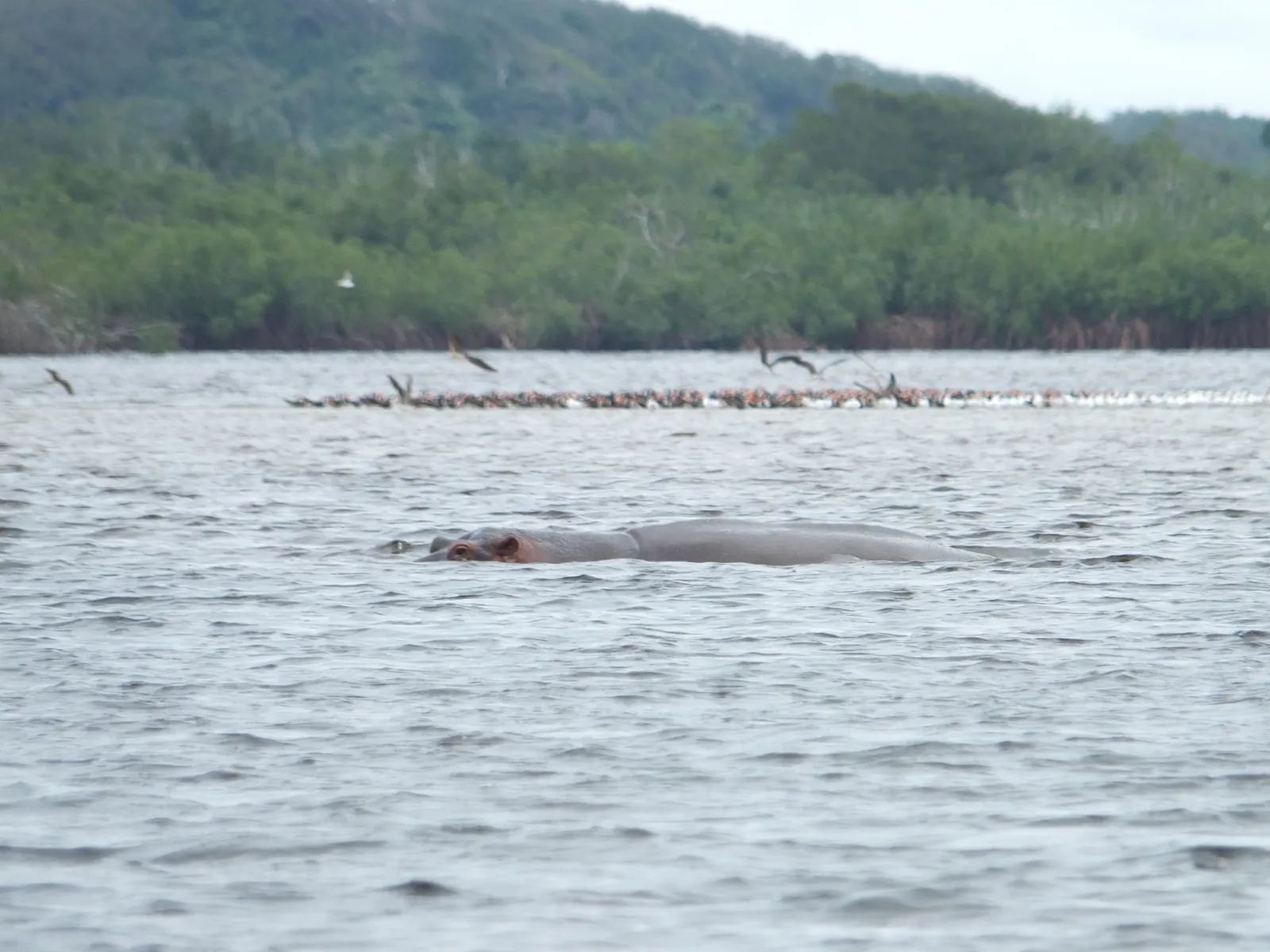
photo Tony King, CC BY 4.0 Hippo in the lagoon, in front of a sandbank of birds.
